
"I never expected to see you here."
Kim Jong Un spoke these words on June 30, 2019, as Donald Trump stepped across the Demilitarized Zone and onto North Korean soil. The first American president to do so. It was Kim who had sent the invitation—personal, direct, almost casual in its timing—inviting Trump to meet him at Panmunjom. When Trump crossed the line, Kim smiled and expressed genuine surprise.
He wanted this meeting. Badly. And he had spent two years laying the groundwork for it.
What Kim Offered
From 2018 to 2019, Kim made concrete moves that cost him strategic flexibility:
He halted all nuclear tests and long-range missile launches—unilaterally, with no preconditions
He blew up the Punggye-ri nuclear test site with foreign journalists watching
He freed three American prisoners before Singapore, handing them to Secretary Pompeo as a goodwill gesture
At Hanoi, he offered to dismantle Yongbyon—the heart of North Korea's plutonium production—in exchange for sanctions relief
The BBC reported that North Korea's strategy involved offering dismantlement at known, monitored sites like Yongbyon while maintaining undisclosed enrichment capabilities. This was tactical statecraft, not simple deception. Revealing everything would eliminate all leverage. But the deeper issue was the American demand for Complete, Verifiable, Irreversible Denuclearization (CVID). It sounded technical. It was actually a demand for surrender—asking Kim to strip naked before the world and enter the room as a beggar rather than a leader.
When Trump walked away at Hanoi, Kim did not escalate. He maintained his testing moratorium. He kept writing letters. He kept the door open.
The Inheritance
To understand Kim requires acknowledging the history that preceded him. North Korea's most famous attacks—the 1968 USS Pueblo seizure, the 1969 EC-121 shootdown, the 1983 Rangoon bombing, the 1987 KAL Flight 858 bombing—all occurred under his father Kim Jong Il or grandfather Kim Il Sung. These killed Americans, Japanese, and allied personnel.
Under Kim Jong Un, the pattern shifted dramatically. The aggression became calibrated for leverage rather than destruction. The Sony Pictures hack, the WannaCry ransomware attack, the massive cryptocurrency thefts—these were tools designed to force the U.S. to the negotiating table, not to wage total war. Realists have long argued these are rational survival tactics: messages that say "I can hurt you if you try to topple me, but I would rather talk."
Kim never attacked the West kinetically. He wanted engagement, not escalation.
The Warmbier Question
The case of Otto Warmbier haunts this narrative. The 22-year-old American student died in 2017 after being returned from North Korean custody in a vegetative state. North Korea claimed botulism; American doctors found cardiopulmonary arrest—catastrophic brain damage from lack of oxygen and blood flow. Critically, medical examination found no evidence of physical trauma, no broken bones, no torture.
North Korea had every strategic reason to keep Warmbier alive. Detainees are bargaining chips used to secure high-level visits. Kim charged the United States $2 million for his hospital care—hardly the behavior of a state that had intentionally killed its leverage. The most plausible explanation is a medical episode—suicide attempt, adverse reaction, or freak cardiopulmonary event—followed by fifteen months of concealment hoping for recovery. Tragic negligence, but not premeditated murder by a leader seeking reconciliation.
What He Actually Wants
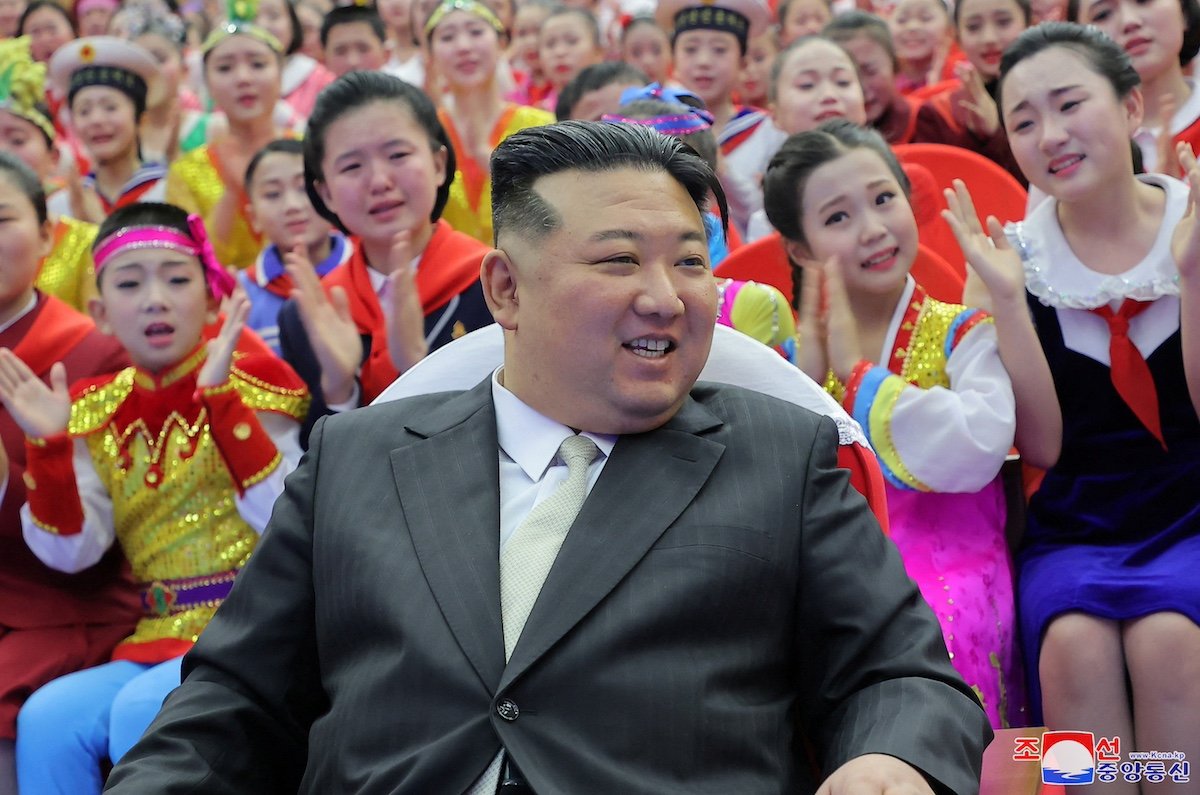
Beneath the missiles and the parades, Kim is fascinated by the West he has observed from a distance. Despite official bans, K-pop, Hollywood films, and South Korean dramas circulate on smuggled USB drives throughout North Korea. Kim reportedly watches Western movies. He knows what he's missing.
His people are hungry—literally. Sanctions relief would let North Korea feed itself. He wants a seat at the table. He wants to participate in world markets, in culture, in the normal flow of nations.
Now, as Trump begins his second term, Kim is extending another olive branch, openly demanding recognition as a nuclear state—a status Western experts privately acknowledge is irreversible.
The Opportunity
Kim tried. He demolished test sites. He freed hostages. He wrote letters. He crossed borders. He offered Yongbyon. He maintained moratoriums even after Trump walked away. His tools were cyber—deniable, calibrated, designed to compel engagement rather than cause destruction.
The question isn't whether North Korea will disarm. It won't. The question is whether America can accept a nuclear North Korea as a negotiating partner rather than a disarmed supplicant—and whether the West can finally see what Kim actually wants: not war, not destruction, but dignity, recognition, and a chance to join the world he sees on those smuggled screens.
That's the deal on the table. It always has been.
Written by M.G. Sterling 2026
"A reporter tells you the building is on fire. Sterling tells you it was built to be an oven."