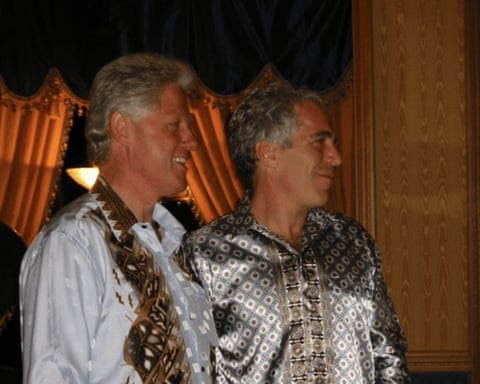
On an August morning in 2019, the most notorious inmate in America was found unresponsive on the concrete floor of a Manhattan jail cell, the cameras that should have been watching him conveniently malfunctioning, the guards who should have been checking on him inexplicably off their rounds. By the time the news alerts finished circling the globe, Jeffrey had done the one thing prosecutors, victims, and a long list of powerful acquaintances assumed he would never again be allowed to do: he had taken control of the ending.
What he left behind was not closure but a paper trail. School files and SEC depositions, internal FBI notes and non‑prosecution agreements, flight logs, shell companies, anonymous emails about buried bodies in the New Mexico desert, a last‑minute trust promising $100 million to a much younger girlfriend, and the testimonies of women who had been told for decades that their suffering did not matter. Taken together, those fragments reveal not just a predator, but an intelligent, cold reader of institutions—a man who treated schools, banks, media, prosecutors, and billionaires the way a card sharp treats marks at a table, always testing how far they could be pushed before they pushed back.
Act I The boy from Sea Gate

Jeffrey Epstein did not begin life in the rarefied spaces he later haunted. Born in 1953 in Brooklyn, he grew up in Sea Gate, a slightly frayed gated community at the tip of Coney Island, the son of a New York City Parks Department worker and a school aide. It was the kind of lower‑middle‑class upbringing that produces millions of anonymous lives; what set him apart early was numbers.
At Lafayette High School, Epstein was known for being very good at mathematics, reportedly skipping grades and graduating around sixteen. That “kid genius” detail would later feature in profiles, a simple story about talent lifting a boy beyond his station. After high school he enrolled at Cooper Union in 1969, then moved to NYU’s Courant Institute, studying advanced mathematics and even touching on niche areas like the mathematical physiology of the heart, but he never completed a degree at either institution. He learned, instead, how far partial affiliation with prestigious places could be stretched.
In 1974, the Dalton School—an aggressively status‑conscious private school on Manhattan’s Upper East Side—hired Epstein to teach math and physics despite his lack of a college degree. Former students described him as intellectually confident and slightly unsettling, a teacher who seemed more like an adult trying on the role of “cool older brother” than a conventional authority figure. He came to student parties where there was drinking, hovered near teenage girls in the hallway, and, crucially, spent a lot of time cultivating the wealthy parents who dropped those girls off at the curb.
Decades later, a posthumous psychological assessment would conclude that Epstein met most criteria for narcissistic personality disorder and scored near clinical thresholds for psychopathy. Consultants who reviewed his history for congressional hearings described his “empathy” as a form of human signal intelligence: he listened not to feel what others felt but to intercept their insecurities, fears, and wants, the way an intelligence agency intercepts radio traffic. Dalton, in hindsight, looks like his first real listening post. The classrooms gave him cover; the parents gave him targets.
By 1976, Dalton had had enough. Internal concerns about his behaviour with students culminated in his departure—later summarized blandly as dismissal for “poor performance.” The official reason was mundane; the underlying discomfort, former colleagues would later suggest, ran deeper.
Wall Street and the first escape
The fall from Dalton did not send Epstein back to Brooklyn. With an introduction from a Dalton parent, he landed on the trading floor at Bear Stearns, starting as a junior assistant to a trader. In a culture that claimed to care about credentials, he had none; in a culture that secretly prized audacity, he had exactly what it rewarded.
He moved quickly. Within a few years he was handling options trades and advising high‑net‑worth clients; by 1980, he had become a limited partner, an extraordinary ascent for someone with no degree and only a few years of experience. The explanation, repeated for years, was that he simply saw patterns others could not. It was a flattering story—for him, and for the firm that had bet on him.
Then, abruptly, it ended. In 1981, Epstein resigned after an internal issue later described as a “Reg D violation” associated with a St. Joe Minerals insider‑trading matter. He gave an SEC deposition, appeared in the frame of serious misconduct, and emerged without charges. It was the first visible instance of a pattern that would repeat: Epstein swam in polluted water, yet somehow avoided being the fish pulled out and measured.
What he carried with him from Bear was not just money but knowledge—the informal mechanics of how a major financial institution bends when someone important wants something, where the seams are in regulatory oversight, and which kinds of stories auditors and prosecutors prefer to accept.
Bounty hunter in the shadows

Out of Bear’s wreckage, Epstein fashioned a role that would suit him even better: high‑end asset recovery specialist. In 1981, he founded Intercontinental Assets Group (IAG), a firm that offered to help clients recover money stolen or embezzled by crooked brokers and lawyers. He later described himself as a kind of financial “bounty hunter,” chasing funds that did not want to be found for people who did not necessarily want to explain how they had lost them.
Asset‑recovery work lives in the gray zone. Clients are often compromised, adversaries are usually compromised, and everyone has an incentive to keep negotiations out of open court. Epstein thrived there. He could quietly collect information on where money had been hidden, who had moved it, and what each party feared most if the matter went public. The fee was one thing; the leverage was another.
Friends from that era recalled him boasting that he did work for intelligence services, and later reporting documented that he held, at one point, an Austrian passport with a false name and residence, supposedly to ease travel in the Middle East. None of that has been tested in court, but it matches the picture that would emerge later: a man who liked to hint that he had patrons in places where normal rules did not apply, and who behaved as if he did.
Towers: learning from a Ponzi
By the late 1980s, Epstein had attached himself to Steven Hoffenberg’s Towers Financial Corporation, a debt‑collection and investment firm out of New York. Towers raised roughly 450 million dollars from investors on the promise of buying and turning a profit on delinquent consumer debt. In reality, prosecutors would later show, it was a Ponzi scheme: new investor money was used to pay old investors.
Hoffenberg later called Epstein his “protégé,” claiming that Epstein “took over the securities side” of Towers and helped design key elements of the scheme’s financial machinery, though Epstein was never charged. When the structure collapsed, Hoffenberg went to prison for a long federal term. Epstein’s name appears throughout the story—in SEC records, in Hoffenberg’s recollections—but not on any indictment.
From a distance, it looked like another lucky escape. Up close, it looked like a graduate seminar: how to operate inside a large‑scale fraud, how regulators eventually close in, and how careful structuring of roles and paperwork can ensure that some people are left holding the bag while others walk away. Epstein appeared to be paying attention.
Wexner: becoming the billionaire’s double

The real transformation of Jeffrey Epstein’s life began when he entered the orbit of one man: Leslie Wexner, the Ohio‑based retail magnate behind Victoria’s Secret and a constellation of mall brands. The connection came through Robert Meister, an insurance executive already trusted inside Wexner’s circle.
Epstein’s initial approach was not to sell but to serve. He reportedly offered Wexner free or low‑cost advice on knotty tax and asset questions, presenting himself as the outsider who could cut through the clutter that traditional advisers had left unresolved. He flattered Wexner’s intelligence, offered him novel structures, and, slowly, positioned himself as the man who saw the bigger picture.
Over several years, he displaced long‑time lawyers and financial advisers, insinuating himself into the centre of Wexner’s operations. In 1991, Wexner signed a sweeping power of attorney that gave Epstein the authority to sign his name, move his money, buy and sell his properties, open and close his bank accounts, and borrow on his credit. On certain documents, there was no clear distinction between Epstein and Wexner at all.
Through Wexner‑linked companies and trusts, Epstein took control of assets that would become symbols of his supposed genius: the vast townhouse on East 71st Street in Manhattan, a private jet, various shell entities that obscured ultimate ownership. To outsiders, it looked like the self‑made life of a brilliant financier. In reality, much of that footprint rested on one billionaire’s delegated trust, and on Epstein’s ability to persuade him to sign it away.
Building the fortress, ignoring the alarm
With Wexner’s power behind him, Epstein expanded both his public image and his private appetites. He bought or developed properties in Palm Beach, New Mexico, Paris, and the U.S. Virgin Islands, each one a carefully controlled environment that signalled wealth and provided privacy. Planes shuttled friends, clients, and guests from one to another, creating a sense of a mobile, borderless court.
By the mid‑1990s, according to victims and later court filings, the structure of his sexual exploitation operation was in place. In 1996, Maria Farmer, an artist who had been working for Epstein, reported to the NYPD and then to the FBI that he and Ghislaine Maxwell had sexually assaulted her at a house on Wexner’s Ohio estate. She also said he had taken nude and semi‑nude reference photos of her younger sisters, then twelve and sixteen, and used those images along with threats—including threats to burn down her house—to silence her.
An FBI report in September 1996 recorded her allegations, including explicit reference to child sexual abuse (CSAM) material and death threats. Internal notes later unearthed show that the case was effectively labelled “investigation not warranted.” No urgent search warrants, no follow‑up interviews with the sisters, no raids on the Ohio property.
Looking back, congressional inquiries have treated that file as the first decisive federal failure. The government had detailed allegations involving minors and a named suspect, and it chose to look away. Within the walls of Epstein’s growing fortress, the message would have been clear: the system could be pushed.
Virginia and the “original betrayer”

Of all the women whose lives intersected with Epstein’s, Virginia Giuffre’s story offers the clearest map of how many institutions had to fail in sequence for his system to work.
She grew up in Florida in what polite reports called a “troubled home.” In her posthumous memoir, Nobody’s Girl, she went further, describing her father, Sky William Roberts, as her “original betrayer.” She alleges he began sexually abusing her when she was seven and that he “traded” her to a neighbour and family friend—a man she calls “Forrest”—to be abused there as well.
By her early teens, she was running away repeatedly, bouncing between foster homes and a harsh “jail‑like” school for troubled teens. At fourteen or fifteen, after escaping that school, she made her way to Miami and survived for a time on the streets. That was where she met Ron Eppinger.
Eppinger, then in his sixties, pulled up beside her in a car. He offered the language of rescue—he ran a modelling agency called Perfect 10, he said, and could be her “new daddy.” In reality, federal prosecutors later showed, Perfect 10 was a front for a high‑end escort service; from 1997 to 1999, he smuggled women from Eastern Europe under false pretences and forced them into prostitution.
For about six months, Giuffre says, he drugged and raped her and sold her to clients. Her rescue came not because someone went looking for her, but because the FBI raided the home of a nightclub owner to whom Eppinger had “gifted” her. She was discovered during the search in June 1999, a fifteen‑year‑old girl in yet another stranger’s house.
Giuffre cooperated with the FBI, helping build the case that eventually put Eppinger in federal prison. Afterward, she was sent back to her parents in Loxahatchee, Florida, to live in a trailer in their backyard, and tried—briefly—to return to the fragile normality of high school.
In Nobody’s Girl, she does not state explicitly that the sexual abuse by her father continued after the FBI returned her. She does describe a continuing pattern of physical violence and control. On a family camping trip, she writes, she confronted him in front of relatives about what he had done to her; he dragged her into a camper van and beat her while the others remained outside and did nothing.
She also came to suspect, later, that he may have accepted hush‑style money connected to Epstein. Not long after she was drawn into Epstein’s circle, she noticed her father buying a new boat and other items that did not fit a maintenance worker’s salary; in her mind, the timing did not feel like coincidence. Sky Roberts has strenuously denied all allegations of sexual abuse and hush money, writing in a letter to the memoir’s ghostwriter, “I never abused my daughter… I gave my daughter everything she ever wanted and never touched her sexually,” and claiming he knew nothing of Epstein’s true nature until years later. One of Virginia’s brothers has publicly said he believes her and has confronted their father over the claims.
Those contested family memories form the backdrop to what happened next.
Mar‑a‑Lago: inside the golden gates

On 11 April 2000, Sky Roberts was hired at Mar‑a‑Lago, Donald Trump’s private club in Palm Beach, as a maintenance worker earning $12 an hour. Over time, he rose to the role of maintenance manager, developed enough of a rapport with Trump to receive a personal letter of recommendation, and was eventually photographed shaking his hand. By his own later account, he was proud of what the job meant for his family.
In April that same year, he helped his daughter get a job at the club’s spa as a locker‑room and towel attendant, earning nine dollars an hour. Father and daughter would sometimes meet there for lunch, a tableau of normalcy: a hardworking staffer, a teenage girl in a white uniform, the backdrop of chandeliers and manicured lawns.
It was in that setting that Ghislaine Maxwell approached Virginia. Maxwell, a familiar face at the club, noticed the girl in the locker room and offered what sounded like salvation: training as a travelling massage therapist for Jeffrey Epstein, a generous patron who needed help on his private trips abroad. She would see the world, earn good money, and leave behind, at last, the chaos that had defined her life.
Before approving the idea, Roberts testified that he drove to Epstein’s house during a lunch break to “check him out.” He later told a court he saw nothing alarming, just a rich man’s mansion, and concluded the offer was safe. In that moment, all the threads converged: a girl who had been failed by home, by child‑protection services, by a “jail‑like” school, by a trafficking investigation that treated her case as closed once she was physically removed; a father she would later accuse of abuse; a club that sold itself as an enclave of security; and a woman whose job, in effect, was to spot exactly this kind of vulnerability.
For Epstein, it was another successful read—another signal intercepted and exploited.
Predatory empathy
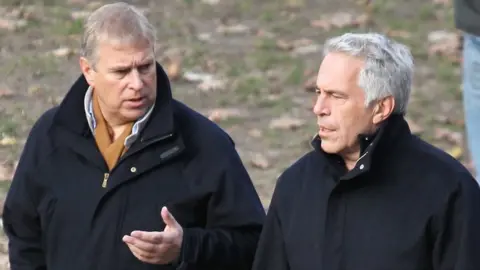
By the mid‑2000s, investigators and psychologists trying to understand Epstein’s methods began to focus less on his IQ and more on his lack. In 2026, a House committee summarizing expert testimony described him as someone who viewed humans as quantifiable assets, not as moral equals.
In jailhouse conversations shortly before his death, Epstein reportedly speculated to a psychologist that he might be autistic, citing an aversion to noise, a tendency to clamp his hands over his ears when overwhelmed, and a sense that he did not experience emotions the way others did; he compared himself to the character in Rain Man. Former partners described him as “emotionally infantile” and “stunted,” a man who collected people the way a child collects toys, obsessing over specific objects or topics—hairbrushes, obscure corners of physics—in ways that felt off for a grown adult.
A 2025 study titled A Posthumous Psychopathic Assessment of Jeffrey Epstein concluded that he satisfied eight of nine criteria for narcissistic personality disorder and scored just below clinical thresholds for psychopathy. The question was not whether he felt nothing; it was what he did instead of feeling.
One metaphor that stuck in internal reports was “human SIGINT”—signals intelligence. Traditional SIGINT involves intercepting communications between machines; Epstein, consultants argued, intercepted the signals humans send without meaning to: the flinch when money is mentioned, the brightening at a name, the slip when a secret brushes too close to the surface. He did not empathize; he listened, catalogued, and filed away.
For a man like that, the real prize was never just money or sex. It was the intellectual thrill of the con, the quiet, corrosive pleasure of proving that the so‑called smartest people in the room could be manipulated as easily as anyone else.
Taxes, trusts, and kompromat
By the 2000s, the legend around Epstein’s wealth crystallized into a simple line: he managed money for billionaires, and only for billionaires. There was talk of a hedge fund so exclusive that virtually no one could name an investor, let alone see its performance. When investigators went hunting for the details, they found something stranger: no registered hedge fund in his name, but vast payments labelled as consulting or advisory fees.
One of the most striking streams came from Leon Black, co‑founder of Apollo Global Management, who paid Epstein approximately 158 million dollars between 2012 and 2017 for tax and estate‑planning work. Another pillar was Southern Trust Company, his firm in the U.S. Virgin Islands, which benefited from a decade‑long economic‑incentive package cutting its effective tax rate to around four percent and saving him an estimated 300 million dollars.
In 2025, Senator Ron Wyden, chair of the Senate Finance Committee, publicly asked why the IRS had never closely audited such outsized payments to a man with no formal credentials in tax law or accounting. The question hovered in the air: were these truly fees for high‑end tax planning, or was “tax advice” a polite label for services that included access, introductions, and the careful movement of money people did not want traced?
Parallel to that financial story, another narrative gestated: Epstein as an asset or cutout for intelligence services. Former U.S. Attorney Alexander Acosta reportedly told colleagues that he had been advised to “back off” the 2008 case because Epstein “belonged to intelligence,” a phrase he later softened under oath but never fully retracted. His documented ties to figures such as former Israeli Prime Minister Ehud Barak, and accounts of senior intelligence officials staying at his properties, added to the sense that he operated in a space where governments and private power blurred.
Journalists including Whitney Webb framed his world as “blackmail capitalism”: a model in which sexual and financial secrets were not by‑products but the engine of influence. Cameras embedded throughout his Manhattan townhouse, isolated properties like Little St. James, the steady stream of VIP guests—all of it suggested a deliberate architecture for kompromat, even if no court has formally stamped that word on his file.
In practice, the financial and intelligence theories are less competitors than overlays. The tax work and trust structures got him into rooms with the ultra‑rich and the powerful; the exploitation of those rooms made him valuable to anyone interested in wielding leverage over them.
Killing the story, cutting the deal
By the early 2000s, Epstein occupied an odd space in the New York imagination: a man everyone seemed to have seen at a party, few claimed to know well, and some whispered about in ways that never quite made it into print. One of the first serious attempts to break that silence came from journalist Vicky Ward, who profiled him for Vanity Fair in 2003.
Ward interviewed Maria Farmer and her sister, and initially drafted a story that included their allegations of abuse. Before publication, Epstein and his lawyers descended on the magazine. Attorney Marty Singer led a charge of defamation threats, warning of lawsuits that could cost tens of millions. Ward and then‑editor Graydon Carter later described a climate of intimidation; Carter has said he received a bullet and a severed cat’s head as warnings, though those specific acts rest on his account rather than police documentation.
What is documented is the edit: Farmer’s allegations were cut. The article ran as “The Talented Mr. Epstein,” a relatively flattering portrait that included a line from Wexner praising Epstein’s ability to “see patterns” in markets and politics. In the space where an early warning might have appeared, readers got another layer of mystique.
On the ground in Palm Beach, detectives were less easily charmed. As local police investigations into complaints from underage girls intensified in the mid‑2000s, Epstein hired teams of private investigators, some of them former Miami officers, to watch and harass accusers and their families. Victims described unmarked SUVs parked outside their homes, an investigator allegedly running a parent off the road, and intrusive background checks on boyfriends and relatives. The same machinery, records show, turned on detectives and even federal agents.
After years of grinding back‑and‑forth, the case reached its infamous resolution: a 2007–2008 non‑prosecution agreement. Epstein pleaded guilty in state court to solicitation‑related charges, served a county jail sentence that allowed him to leave for “work release” most days, and, most importantly, secured a federal agreement granting broad immunity to himself and unnamed “co‑conspirators” for related conduct. Many of his victims were not fully informed of the deal until long after it was signed.
Around that time, he quietly transferred about 100 million dollars back to Wexner and his wife. Wexner would later describe this as repayment of funds Epstein had misappropriated. Congressional investigators have questioned why such a large alleged theft and repayment did not produce a criminal complaint, and whether the transfer was, in effect, a way for both men to draw a line under a toxic chapter without airing the details.
Local case files show that some officials described Epstein’s victims as “prostitutes,” not trafficked minors. That framing made it politically and legally easier to accept a lenient plea; it is simpler to bargain down a vice case than to explain why you are letting a serial child‑abuser walk with a slap on the wrist.
For Epstein, the lesson was clear: with the right blend of money, lawyers, intimidation, and strategic usefulness, systems that present themselves as neutral can be bent.
Reinvention and reach
After his release, Epstein adjusted but did not vanish. He complied with sex‑offender registration requirements, moved more cautiously, and leaned harder into the roles of philanthropist and scientific patron. He funded projects at institutions like MIT and Harvard, hosted salons with Nobel laureates and star technologists, and crafted a public identity as a man obsessed with the future of science rather than the girls of Palm Beach.
At the same time, his financial connections deepened. Leon Black’s nine‑figure payments for “tax advice,” later the subject of internal and external reviews, flowed between 2012 and 2017. Banks such as JPMorgan and Deutsche Bank continued to handle his money, booking him as a valuable client despite internal flags about reputational risk.
It was during this period that he began actively courting the new princes of Silicon Valley.
Elon’s inbox
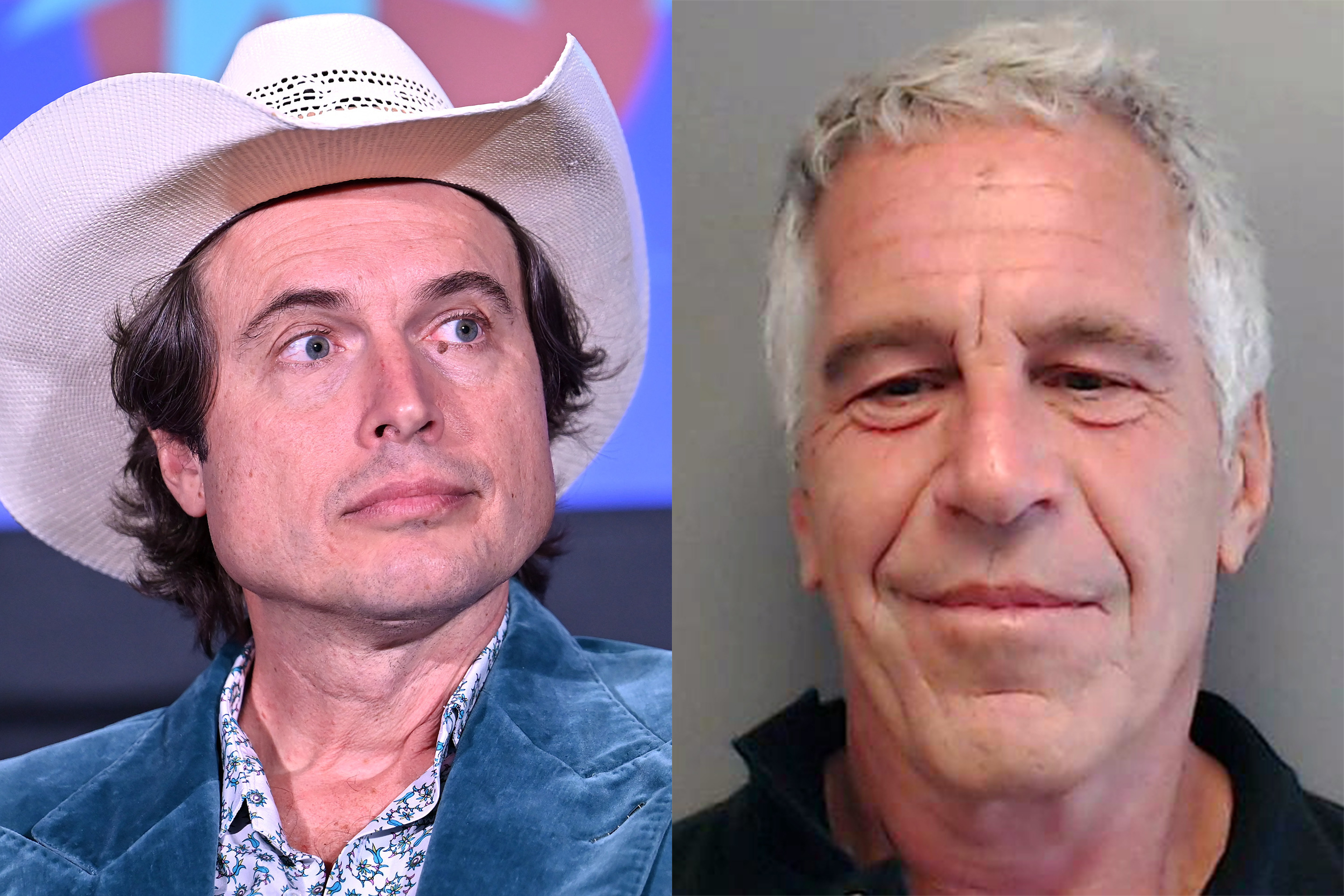
By 2012, Jeffrey Epstein was no longer any kind of secret. He was a convicted sex offender whose sweetheart plea deal had made national news, whose Palm Beach abuses had been chronicled in local and national outlets, and whose name appeared in lawsuits and investigative reporting.
In public, Elon Musk would later say that he had “barely” known Epstein, calling him “obviously a creep,” claiming he had repeatedly declined invitations to the island, and dismissing attempts to link them as smears. In 2019 he told Vanity Fair he had only ever been in the same room with Epstein once; in 2025, as new files dropped, he took to his own platform to call renewed questions “false.”
The 2026 Department of Justice document release complicated that story. Emails from 2012 to 2014 show Epstein inviting Musk to Little St. James and Musk responding along the lines of “sounds good, will try to make it.” In another exchange, Musk mentions being in the Caribbean over the holidays and assumes Epstein will “most likely be on your island,” a tone more consistent with friendly coordination than with disgusted rejection.
The files do not show Musk on Epstein’s flight manifests, nor do they allege that he ever set foot on the island or committed any crime. What they do expose is a gap between public posture and private language, at a time when Epstein’s status was not in doubt.
For Kimbal Musk, Elon’s younger brother and a Tesla board member, the documents land even closer. Emails reveal Epstein’s team arranging for a woman from his circle—later described as one of his “girls”—to attend Kimbal’s birthday party, then monitoring the relationship as it unfolded. The woman has since said, through counsel, that she felt trapped and coerced by Epstein during that period. Kimbal has acknowledged dating her but insists he did not know her connection to Epstein’s wider operation or that the relationship was, in any sense, engineered.
There is no direct evidence that Kimbal understood the full context. There is ample evidence that Epstein was once again doing what he did best: turning people’s private lives into movable pieces on his board.
The markets noticed. In the days after the DOJ email cache became public, Tesla’s share price fell around eight percent over five trading days. Analysts who had once framed the company’s challenges in terms of competition and execution began speaking instead of “reputational overhang.” For a business whose value depends heavily on the myth of its founder as a truth‑telling visionary, discovering that he had massaged, at best, his distance from Jeffrey Epstein was not a trivial detail.
Any future offering tied to Musk—whether a spin‑off, a SpaceX listing, or an xAI IPO—will now live under that cloud. Investors can model cash flows; they cannot easily discount the risk that another tranche of emails, or another flight log, might land at an inconvenient moment.
The last girlfriend and the frozen will
On 8 August 2019, two days before his death, Jeffrey Epstein signed a will moving his estate, then valued at about 577 million dollars, into a structure known as the 1953 Trust. Buried in the paperwork was a name unfamiliar to most of the public: Karyna Shuliak, a Belarusian dentist in her mid‑thirties, widely described in European and U.S. reporting as his last long‑term partner.
According to investigations by outlets including The New York Times and Le Monde, Shuliak was designated to receive roughly 100 million dollars and a portfolio of marquee assets: the Manhattan townhouse, the Paris apartment, Zorro Ranch in New Mexico, the private islands, plus a large diamond ring and other valuables. In his final legal act, Epstein appeared to be trying to secure a future for a single younger woman who had stayed by his side even after his 2008 conviction.
The trust, however, collided with a different reality. In the years since his death, U.S. and French authorities have moved to freeze many of his assets, divert large portions of the estate into victim compensation funds, and scrutinize transfers that might undermine that goal. Shuliak, on paper the prime beneficiary, finds herself effectively behind the victims in line.
Her situation, in miniature, mirrors the world Epstein left: promises made in private, underwritten by his confidence that he could shape outcomes, overtaken by a belated attempt by the system to reckon with the damage he did.
Zorro Ranch and the bodies in the hills

If Epstein’s New York townhouse and Little St. James were the public symbols of his empire, Zorro Ranch was its strange outpost—a sprawling estate south of Santa Fe, ringed by empty hills and rumours.
New Mexico opened a criminal investigation into the ranch in 2019 but, at the request of federal prosecutors in New York, shelved it later that year, even as civil suits and news stories hinted at what might have occurred there. For years, it sat in the background of the Epstein saga: a piece of property without charges attached to it, a setting rather than a case.
In February 2026, that changed. State authorities announced they were reopening the criminal probe into Zorro Ranch, prompted in part by newly unsealed federal files and a 2019 anonymous email alleging that Epstein had ordered the bodies of two foreign girls buried near the estate. Reuters reported that the email, sent to federal investigators, described the supposed burials in enough detail that New Mexico’s attorney‑general now considers it serious enough to warrant fresh forensic work.
The state has requested full, unredacted access to all federal Epstein files tied to Zorro Ranch, and lawmakers have created a bipartisan four‑member “Epstein truth commission” to take testimony and examine how the original investigation was handled. One member, representative Andrea Romero, told the BBC they were learning of alleged prior reports to the FBI about bodies and trafficking connected to the property. Officials emphasize that the burial claim remains an allegation, not a proven fact—but one grave email is now bending law‑enforcement resources back toward a place the system had once agreed not to look at too hard.
Even without a single shovel in the ground, the image of unmarked graves on a billionaire’s ranch has seared itself into public imagination. It has become shorthand for how far Epstein seemed to believe his isolation and influence extended: far enough that he could, allegedly, make human beings disappear into the landscape. Whether the investigation proves or disproves that claim, the fact that it is being pursued at all marks a shift.
Files, failures, and the long tail
From 2020 onward, waves of documents have been pried out of government custody and into public view under laws dubbed the “Epstein Files” transparency measures. Millions of pages—FBI 302s, civil‑case exhibits, bank records, flight logs, internal memos—have been scanned, OCR’d, and poured over by journalists, lawyers, and ordinary obsessives.
Certain themes recur. The 1996 Maria Farmer file, once a forgotten entry in an FBI database, has become the canonical example of an early, specific, credible allegation involving minors that was shelved. Florida case documents reveal exploited girls being called “prostitutes,” a linguistic manoeuvre that blunted outrage and justified milder charges. Suspicious‑activity reports and internal correspondence from banks like JPMorgan and Deutsche Bank show compliance officers raising questions about Epstein’s accounts, only to be overruled or appeased.
Internal FBI documents, originally released with heavy redactions, have come back into the light with fewer black boxes after congressional pressure. They show that names like Wexner were not absent from investigative thinking; they were merely absent from the indictments.
For institutions, the fallout has been reputational and, in some cases, financial. Banks have paid fines and watched their risk departments hauled into hearings; universities have returned or redirected tainted donations; media organizations have had to explain prior editorial decisions; law‑enforcement agencies have been forced to explain why certain leads were deemed not worth following.
For some of the men in Epstein’s orbit who have not faced criminal charges, the punishment has been stranger: permanent, searchable, context‑free association. A name in a flight log, a line in a deposition, an email greeting—little artefacts that, out of context, might mean everything or nothing, but that now live forever in the cloud, ready to be rediscovered whenever the next scandal crests.
The fall of a prince
No one has embodied the slow‑motion cost of that exposure more clearly than Andrew Mountbatten‑Windsor, formerly known as Prince Andrew, Duke of York. Once cast as the “playboy” son of the British monarch, Andrew’s public role collapsed after he settled a civil sexual‑abuse lawsuit brought by Virginia Giuffre in 2022, without admitting liability. Stripped of military titles and royal patronages, he retreated from public life.
In February 2026, he was pulled back into the spotlight on very different terms. British police arrested Andrew on suspicion of misconduct in public office, as part of an investigation into whether, while serving as the UK’s special representative for international trade and investment, he had shared confidential information or otherwise abused his position in dealings that touched Epstein. Officers searched a property in Norfolk associated with him; after questioning, he was released under investigation, with no charges filed at the time of writing. He has denied wrongdoing.
The image of detectives combing through the estate of a man who once represented Britain’s interests abroad underscored how far the ground has shifted. Titles and traditions have not insulated Andrew from the gravitational pull of Epstein’s name; if anything, they have made the spectacle of accountability more pointed. In the United States, lawmakers watching the British case unfold have responded with a simple question: “Who’s next?”—which other supposed untouchables are still quietly hoping their own file never makes it out of the archives.
Virginia, and what remains
By now, it is tempting to treat Jeffrey Epstein as a grotesque anomaly, a lightning strike no system could reasonably have been expected to anticipate. The documents, and the lives stitched through them, tell a harsher story. At almost every stage—school, home, foster care, law enforcement, media, banking, philanthropy, intelligence, royalty—someone saw enough to act and chose not to.
In that sense, Virginia Giuffre’s life is not an adjunct to the narrative. It is its core. From the “troubled home” where she says her first abuser was her own father, through the streets of Miami where Ron Eppinger scooped her up, through a “jail‑like” school, an FBI raid, a trailer in Loxahatchee, a job at a club owned by a future president, and finally into the hands of a man the state of Florida and the federal government had every opportunity to stop years earlier, she traced the path of least institutional resistance.
Her courage did not consist in a single explosive revelation but in repetition. She told and retold her story—to police, to civil lawyers, to journalists, to readers of her memoir—each time naming men and moments others would have preferred to forget. Each time she was dismissed, shamed, or sued, she widened the frame, insisting that her life was evidence not just against one predator but against the culture that protected him.
Epstein denied the world the parenthesis everyone expected: a long criminal trial, a verdict, the sight of him on a witness stand forced to answer questions he had spent a lifetime dodging. In that narrow sense, he succeeded; he chose his exit, and no court will ever pronounce a full accounting of his crimes. But in a larger sense, he lost control of the story the moment women like Virginia refused to go away.
Their efforts have dragged banks, universities, ministries, courts, and even royal households into uncomfortable light. They have redirected much of the fortune he tried to seal away into funds for victims. They have prompted new investigations into old ground, like the reopened probe at Zorro Ranch. They have made it impossible for politicians, CEOs, and princes to pretend that sitting next to Jeffrey was just another social misstep.
Virginia’s suffering, viewed from this distance, revealed something about human nature that no psychological profile of Epstein ever could: how easily people will align themselves with whatever story lets them avoid seeing, and how stubbornly the truth returns when those who were hurt refuse to disappear. She is gone in the sense that the girl who walked into Mar‑a‑Lago’s spa no longer exists; Epstein is gone in the sense that he will never answer a question again. But the world they leave behind is one in which “The Talented Mr Epstein” no longer reads as a clever profile title but as a warning label.
The men who orbited him—princes, fund managers, fixers, technologists—will go on issuing statements, reshuffling boards, and, in some cases, taking companies to market. Some will prosper, some will rebrand, a few may manage to persuade parts of the public to forget. Yet they now operate in an environment where archives do not forget, where an anonymous email about a ranch can reopen a criminal inquiry, where an old “sounds good, will try to make it” in a billionaire’s inbox can knock eight percent off a stock.
For people who once believed they were untouchable, that uncertainty may be the closest thing to justice this story can offer.
VIRGINIA GIUFFRE'S LEGACY LIVES ON THROUGH Speak Out, Act, Reclaim (SOAR)
Transparency Disclosure: This site is funded by our community. When you click our affiliate links, we may earn a small commission at no extra cost to you. 100% of these funds go toward our monthly Cloudflare infrastructure costs to keep this site fast and secure for everyone.
Written by M.G. Sterling 2026
"A reporter tells you the building is on fire. Sterling tells you it was built to be an oven."