


🔥 On Sale Right Now!



While the world fixates on the Strait of Hormuz—declared "closed" by Iran's Islamic Revolutionary Guard Corps on March 2—the real story is unfolding in the North Sea. British and Norwegian producers are not scrambling for supply; they are frantically selling into the spike, exploiting a yawning disconnect between paper panic and physical reality.
The Hormuz Hysteria
The headlines are apocalyptic. The IRGC's senior adviser Ebrahim Jabari has threatened to set ablaze any vessel attempting passage through the world's most critical oil chokepoint. Over 150 tankers, including 55 VLCCs, are effectively stranded in the Persian Gulf, holding roughly 20% of the world's daily oil consumption hostage. Brent crude has surged to $83.39 per barrel—a 14-month high—while European natural gas futures have exploded 70% as Qatar's LNG production grinds to a halt.
Wall Street analysts are dusting off their $100-per-barrel forecasts. The world is panic-buying futures.
But here is the uncomfortable truth the futures market does not want to acknowledge: the world was already drowning in oil before the first missile struck Hormuz.
The Oversupply Reality
The International Energy Agency's January 2026 Oil Market Report delivered a stark warning that now reads like prophecy: global supply was on track to exceed demand by 4.25 million barrels per day in Q1 2026—equivalent to roughly 4% of world consumption. Global inventories had already swelled by 470 million barrels throughout 2025, or 1.3 million barrels per day on average. The market was structurally oversupplied before a single IRGC boat entered the strait.
While Asian refiners scramble for Middle Eastern crude that may never arrive, British producers are operating in a parallel universe. North Sea crude loadings hit an eight-year high in December 2025 at 2.1 million barrels per day, and the momentum has carried into March. The BFOET grades—Brent, Forties, Oseberg, Ekofisk, and Troll—are flowing at their fastest pace in five months.
The Omega South Alpha Gambit
The timing could not be more fortuitous for Atlantic producers. On March 1-2, Equinor and partners including Harbour Energy announced a major commercial discovery at the Omega South Alpha prospect near the Snorre field. Preliminary estimates place recoverable reserves between 25 and 89 million barrels.
Crucially, the licensees are not waiting. The "fast-track" development program means tie-back to the Snorre A platform is already underway. This is "competitive" oil hitting the water precisely as war premiums spike physical prices to $82–$85 per barrel—while production costs for these tie-back barrels remain a fraction of that figure.
Equinor holds a 31% stake in the license, Petoro 30%, Harbour Energy 24.5%, with INPEX Idemitsu and Vaar Energi holding the remainder. They are selling into the panic while the world is still reeling from headlines.
The British Sales Advantage
The United Kingdom's position is uniquely exploitable. With the Ofgem energy price cap set to drop 7% to £1,641 on April 1, domestic demand is cooling as consumers anticipate lower bills and shift consumption patterns. This has created a "surplus pocket" that British exporters are now shipping to European and Asian buyers terrified of Middle Eastern supply disruption.
The arbitrage is brutal: British sellers are capturing the war premium on physical barrels while the domestic market remains insulated by high storage levels following a mild end to February. While futures traders push Brent to 14-month highs on fears of scarcity, actual North Sea terminals are engaged in what traders privately call a "strategic dump"—liquidating inventory into the most favorable price window in years.
The Red Herring
The "Hormuz Panic" is, in essence, a red herring for the Atlantic basin. While the closure has trapped millions of barrels of Gulf crude, the UK and Norway are effectively the only major producers with an "open tap" right now. They are liquidating their surplus at wartime prices even as the structural global glut persists.
If China can secure Atlantic oversupply through back channels or long-term contracts during Beijing's Two Sessions, they might bypass the Hormuz disruption entirely. The real energy insecurity gripping Asia is not about global scarcity—it is about geographic concentration. The world is not short on oil; it is short on Gulf oil.
British producers understand this distinction perfectly. They are selling while the world is panic-buying, laughing all the way to the bank as the red herring of Hormuz drives premiums to historic levels. When the strait eventually reopens—and it will—the same market that bid prices to $85 will discover that the Atlantic basin has been dumping inventory into an already oversupplied market.
The circular deadlock between physical reality and paper speculation has created the arbitrage opportunity of the decade. And British sellers are cashing in.
Written by M.G. Sterling 2026
"A reporter tells you the building is on fire. Sterling tells you it was built to be an oven."
"Take from the rich, give to the hungry. Sterling decodes modern-day narratives from economics to biotech and humanity. You are not his client, you are his brother or his sister. Sterling HAS your back as long as he can stand."
When the first waves of U.S. and Israeli strikes hit Iranian military installations on February 28, 2026—killing Supreme Leader Ayatollah Ali Khamenei and decapitating the Islamic Revolutionary Guard Corps leadership—Iran's most powerful international partners offered diplomatic condemnation rather than military intervention. Despite years of cultivating strategic partnerships with Tehran, Moscow and Beijing have refrained from deploying forces to defend the Islamic Republic.
The Agreements: Strategic Partnerships Without Military Obligations
The foundation of Iran's relationships with both Russia and China rests on extensive cooperation agreements that notably lack mutual defense clauses.
The Russia-Iran Comprehensive Strategic Partnership (January 2025)
On January 16, 2025, Iran and Russia signed a 20-year treaty formally titled the "Comprehensive Strategic Partnership Between the Islamic Republic of Iran and the Russian Federation". The agreement covers cooperation across defense, counter-terrorism, energy, finance, transport, and technology sectors.
However, the treaty contains no Article 51 collective self-defense provisions. As an IRGC official acknowledged prior to the conflict, these pacts "are not mutual defense treaties". The document provides for military-technical cooperation and intelligence sharing but creates no binding obligation for Moscow to defend Tehran from external attack.
China's 25-Year Cooperation Program (2021)
Beijing's relationship with Tehran operates through the Iran-China 25-year Cooperation Program signed in 2021. This agreement encompasses Chinese investment in Iranian infrastructure, energy, and telecommunications in exchange for discounted oil supplies. The program also includes provisions for military cooperation and potential Chinese access to Iranian ports.
Like the Russia-Iran treaty, this agreement lacks mutual defense obligations. It establishes China as Iran's primary economic partner—Beijing imported over 80% of Iran's exported oil in 2025 —without requiring Chinese military intervention on Tehran's behalf.
Strategic Factors Driving Non-Intervention
Both powers' refusal to intervene reflects calculated strategic considerations.
The U.S. Escalation Risk
Primary among these is the desire to avoid direct military confrontation with the United States. Operation Epic Fury represented a coordinated assault by the world's most powerful military and its regional proxy. Direct intervention would have required engaging U.S. aircraft carriers, stealth bombers, and missile batteries in open combat.
Russia faces particular constraints in this regard. The Kremlin has committed substantial military resources to its ongoing Ukraine campaign. Opening a second front against U.S. naval forces in the Persian Gulf would stretch Russian military capacity beyond sustainable limits.
China's calculation centers on economic rather than military factors. Beijing maintains approximately $600 billion in annual trade with the United States. A direct military clash would trigger economic decoupling, sanctions, and potential global economic disruption that would threaten Chinese economic stability.
Transactional Relationship Structure
Analysts characterize both relationships as "transactional rather than sacrificial". Neither Moscow nor Beijing views Iran as an ally requiring existential defense commitments.
Russia has historically maintained a balancing posture in the Middle East, simultaneously coordinating with Iranian forces while managing relationships with Israel and Gulf Arab states. During the Syrian civil war, Russian advanced air defense systems remained silent during Israeli strikes on Iranian targets, demonstrating Moscow's unwillingness to escalate on Tehran's behalf.
China similarly prioritizes its economic relationships with Gulf Arab states and the United States over solidarity with Iran. When the Trump administration imposed "maximum pressure" sanctions in 2018-2020, Chinese companies reduced Iranian oil purchases to avoid secondary U.S. sanctions.
Logistical Constraints
Both powers face significant logistical limitations that would complicate military intervention.
Russia's military power projection capabilities have atrophied since the Cold War. The Russian navy lacks sufficient carrier battle groups and amphibious assault capabilities to challenge U.S. naval dominance in the Persian Gulf. The Kremlin maintains no regional bases capable of supporting sustained operations against American forces.
China's military similarly lacks the overseas basing infrastructure necessary for sustained Middle East operations. While Beijing has secured port access in Djibouti and Pakistan, neither provides the logistical backbone for combat operations against the U.S. Sixth Fleet.
The Forms Support Has Taken
While refusing direct military intervention, both powers have provided technical and intelligence support to Iran.
Chinese Technical Assistance
Beijing has provided Iran with access to the BeiDou-3 Navigation Satellite System, enabling Iranian missiles to maintain targeting accuracy independent of GPS. China has also supplied high-resolution satellite imagery and expedited delivery of CM-302 supersonic anti-ship missiles.
Russian Hardware Support
Moscow has expedited delivery of S-400 air defense system components, electronic warfare equipment, and spare parts for Iranian military hardware. Russian intelligence services have reportedly shared signals intelligence on U.S. force movements.
This "connective tissue" of support—providing technological infrastructure for Iranian resistance without requiring direct combat—allows Moscow and Beijing to maintain partnerships with Tehran while avoiding catastrophic confrontation with American forces.
Historical Precedent
Russia's restrained posture fits historical patterns in its Iran relationship. During the Iran-Iraq War (1980-1988), the Soviet Union maintained official neutrality while supplying weapons to both sides. Throughout subsequent decades, Moscow has collaborated with Western powers on Iran's nuclear file when such cooperation served Russian interests.
China's track record similarly demonstrates conditional commitment. Beijing has consistently prioritized economic relationships with the United States and Gulf Arab states over solidarity with Tehran during periods of heightened tension.
Iran's Current Leadership Structure
Following Khamenei's death on February 28, 2026, Iran established an Interim Leadership Council on March 1, 2026, in accordance with Article 111 of the Iranian constitution. The council consists of President Masoud Pezeshkian, Chief Justice Gholam-Hossein Mohseni-Eje'i, and Guardian Council member Alireza Arafi.
Ali Larijani, secretary of the Supreme National Security Council, announced the council's formation on state television. The 88-member Assembly of Experts—an elected body of senior clerics—holds constitutional authority to select a new supreme leader. Foreign Minister Abbas Araghchi has indicated this selection process may conclude within days.
Implications
The Russia-China refusal to militarily defend Iran exposes the operational limits of the "axis of resistance" framework. The strategic partnerships Tehran cultivated provided economic benefits, weapons technology, and diplomatic cover—but not the mutual defense guarantees that characterize formal military alliances.
For Iran, this represents a strategic reality check. The partnerships that were expected to provide security have proven insufficient to prevent existential military threat. For Moscow and Beijing, the conflict demonstrates that their Middle East partnerships are instruments of influence rather than alliances requiring existential defense commitments.
The conflict suggests that emerging multipolar competition will feature persistent "gray zone" engagement—proxy support, technological cooperation, and economic alignment—rather than the direct great power confrontations that characterized previous eras.
Written by M.G. Sterling 2026
"A reporter tells you the building is on fire. Sterling tells you it was built to be an oven."
"Take from the rich, give to the hungry. Sterling decodes modern-day narratives from economics to biotech and humanity. You are not his client, you are his brother or his sister. Sterling HAS your back as long as he can stand."

"I never expected to see you here."
Kim Jong Un spoke these words on June 30, 2019, as Donald Trump stepped across the Demilitarized Zone and onto North Korean soil. The first American president to do so. It was Kim who had sent the invitation—personal, direct, almost casual in its timing—inviting Trump to meet him at Panmunjom. When Trump crossed the line, Kim smiled and expressed genuine surprise.
He wanted this meeting. Badly. And he had spent two years laying the groundwork for it.
What Kim Offered
From 2018 to 2019, Kim made concrete moves that cost him strategic flexibility:
He halted all nuclear tests and long-range missile launches—unilaterally, with no preconditions
He blew up the Punggye-ri nuclear test site with foreign journalists watching
He freed three American prisoners before Singapore, handing them to Secretary Pompeo as a goodwill gesture
At Hanoi, he offered to dismantle Yongbyon—the heart of North Korea's plutonium production—in exchange for sanctions relief
The BBC reported that North Korea's strategy involved offering dismantlement at known, monitored sites like Yongbyon while maintaining undisclosed enrichment capabilities. This was tactical statecraft, not simple deception. Revealing everything would eliminate all leverage. But the deeper issue was the American demand for Complete, Verifiable, Irreversible Denuclearization (CVID). It sounded technical. It was actually a demand for surrender—asking Kim to strip naked before the world and enter the room as a beggar rather than a leader.
When Trump walked away at Hanoi, Kim did not escalate. He maintained his testing moratorium. He kept writing letters. He kept the door open.
The Inheritance
To understand Kim requires acknowledging the history that preceded him. North Korea's most famous attacks—the 1968 USS Pueblo seizure, the 1969 EC-121 shootdown, the 1983 Rangoon bombing, the 1987 KAL Flight 858 bombing—all occurred under his father Kim Jong Il or grandfather Kim Il Sung. These killed Americans, Japanese, and allied personnel.
Under Kim Jong Un, the pattern shifted dramatically. The aggression became calibrated for leverage rather than destruction. The Sony Pictures hack, the WannaCry ransomware attack, the massive cryptocurrency thefts—these were tools designed to force the U.S. to the negotiating table, not to wage total war. Realists have long argued these are rational survival tactics: messages that say "I can hurt you if you try to topple me, but I would rather talk."
Kim never attacked the West kinetically. He wanted engagement, not escalation.
The Warmbier Question
The case of Otto Warmbier haunts this narrative. The 22-year-old American student died in 2017 after being returned from North Korean custody in a vegetative state. North Korea claimed botulism; American doctors found cardiopulmonary arrest—catastrophic brain damage from lack of oxygen and blood flow. Critically, medical examination found no evidence of physical trauma, no broken bones, no torture.
North Korea had every strategic reason to keep Warmbier alive. Detainees are bargaining chips used to secure high-level visits. Kim charged the United States $2 million for his hospital care—hardly the behavior of a state that had intentionally killed its leverage. The most plausible explanation is a medical episode—suicide attempt, adverse reaction, or freak cardiopulmonary event—followed by fifteen months of concealment hoping for recovery. Tragic negligence, but not premeditated murder by a leader seeking reconciliation.
What He Actually Wants
 Beneath the missiles and the parades, Kim is fascinated by the West he has observed from a distance. Despite official bans, K-pop, Hollywood films, and South Korean dramas circulate on smuggled USB drives throughout North Korea. Kim reportedly watches Western movies. He knows what he's missing.
His people are hungry—literally. Sanctions relief would let North Korea feed itself. He wants a seat at the table. He wants to participate in world markets, in culture, in the normal flow of nations.
Now, as Trump begins his second term, Kim is extending another olive branch, openly demanding recognition as a nuclear state—a status Western experts privately acknowledge is irreversible.
The Opportunity
Kim tried. He demolished test sites. He freed hostages. He wrote letters. He crossed borders. He offered Yongbyon. He maintained moratoriums even after Trump walked away. His tools were cyber—deniable, calibrated, designed to compel engagement rather than cause destruction.
The question isn't whether North Korea will disarm. It won't. The question is whether America can accept a nuclear North Korea as a negotiating partner rather than a disarmed supplicant—and whether the West can finally see what Kim actually wants: not war, not destruction, but dignity, recognition, and a chance to join the world he sees on those smuggled screens.
That's the deal on the table. It always has been.
Written by M.G. Sterling 2026
"A reporter tells you the building is on fire. Sterling tells you it was built to be an oven."
"Take from the rich, give to the hungry. Sterling decodes modern-day narratives from economics to biotech and humanity. You are not his client, you are his brother or his sister. Sterling HAS your back as long as he can stand."
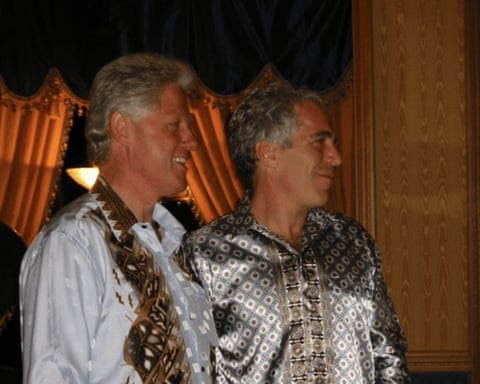 On an August morning in 2019, the most notorious inmate in America was found unresponsive on the concrete floor of a Manhattan jail cell, the cameras that should have been watching him conveniently malfunctioning, the guards who should have been checking on him inexplicably off their rounds. By the time the news alerts finished circling the globe, Jeffrey had done the one thing prosecutors, victims, and a long list of powerful acquaintances assumed he would never again be allowed to do: he had taken control of the ending.
What he left behind was not closure but a paper trail. School files and SEC depositions, internal FBI notes and non‑prosecution agreements, flight logs, shell companies, anonymous emails about buried bodies in the New Mexico desert, a last‑minute trust promising $100 million to a much younger girlfriend, and the testimonies of women who had been told for decades that their suffering did not matter. Taken together, those fragments reveal not just a predator, but an intelligent, cold reader of institutions—a man who treated schools, banks, media, prosecutors, and billionaires the way a card sharp treats marks at a table, always testing how far they could be pushed before they pushed back.
Act I The boy from Sea Gate

Jeffrey Epstein did not begin life in the rarefied spaces he later haunted. Born in 1953 in Brooklyn, he grew up in Sea Gate, a slightly frayed gated community at the tip of Coney Island, the son of a New York City Parks Department worker and a school aide. It was the kind of lower‑middle‑class upbringing that produces millions of anonymous lives; what set him apart early was numbers.
At Lafayette High School, Epstein was known for being very good at mathematics, reportedly skipping grades and graduating around sixteen. That “kid genius” detail would later feature in profiles, a simple story about talent lifting a boy beyond his station. After high school he enrolled at Cooper Union in 1969, then moved to NYU’s Courant Institute, studying advanced mathematics and even touching on niche areas like the mathematical physiology of the heart, but he never completed a degree at either institution. He learned, instead, how far partial affiliation with prestigious places could be stretched.
In 1974, the Dalton School—an aggressively status‑conscious private school on Manhattan’s Upper East Side—hired Epstein to teach math and physics despite his lack of a college degree. Former students described him as intellectually confident and slightly unsettling, a teacher who seemed more like an adult trying on the role of “cool older brother” than a conventional authority figure. He came to student parties where there was drinking, hovered near teenage girls in the hallway, and, crucially, spent a lot of time cultivating the wealthy parents who dropped those girls off at the curb.
Decades later, a posthumous psychological assessment would conclude that Epstein met most criteria for narcissistic personality disorder and scored near clinical thresholds for psychopathy. Consultants who reviewed his history for congressional hearings described his “empathy” as a form of human signal intelligence: he listened not to feel what others felt but to intercept their insecurities, fears, and wants, the way an intelligence agency intercepts radio traffic. Dalton, in hindsight, looks like his first real listening post. The classrooms gave him cover; the parents gave him targets.
By 1976, Dalton had had enough. Internal concerns about his behaviour with students culminated in his departure—later summarized blandly as dismissal for “poor performance.” The official reason was mundane; the underlying discomfort, former colleagues would later suggest, ran deeper.
Wall Street and the first escape
The fall from Dalton did not send Epstein back to Brooklyn. With an introduction from a Dalton parent, he landed on the trading floor at Bear Stearns, starting as a junior assistant to a trader. In a culture that claimed to care about credentials, he had none; in a culture that secretly prized audacity, he had exactly what it rewarded.
He moved quickly. Within a few years he was handling options trades and advising high‑net‑worth clients; by 1980, he had become a limited partner, an extraordinary ascent for someone with no degree and only a few years of experience. The explanation, repeated for years, was that he simply saw patterns others could not. It was a flattering story—for him, and for the firm that had bet on him.
Then, abruptly, it ended. In 1981, Epstein resigned after an internal issue later described as a “Reg D violation” associated with a St. Joe Minerals insider‑trading matter. He gave an SEC deposition, appeared in the frame of serious misconduct, and emerged without charges. It was the first visible instance of a pattern that would repeat: Epstein swam in polluted water, yet somehow avoided being the fish pulled out and measured.
What he carried with him from Bear was not just money but knowledge—the informal mechanics of how a major financial institution bends when someone important wants something, where the seams are in regulatory oversight, and which kinds of stories auditors and prosecutors prefer to accept.
Bounty hunter in the shadows
Out of Bear’s wreckage, Epstein fashioned a role that would suit him even better: high‑end asset recovery specialist. In 1981, he founded Intercontinental Assets Group (IAG), a firm that offered to help clients recover money stolen or embezzled by crooked brokers and lawyers. He later described himself as a kind of financial “bounty hunter,” chasing funds that did not want to be found for people who did not necessarily want to explain how they had lost them.
Asset‑recovery work lives in the gray zone. Clients are often compromised, adversaries are usually compromised, and everyone has an incentive to keep negotiations out of open court. Epstein thrived there. He could quietly collect information on where money had been hidden, who had moved it, and what each party feared most if the matter went public. The fee was one thing; the leverage was another.
Friends from that era recalled him boasting that he did work for intelligence services, and later reporting documented that he held, at one point, an Austrian passport with a false name and residence, supposedly to ease travel in the Middle East. None of that has been tested in court, but it matches the picture that would emerge later: a man who liked to hint that he had patrons in places where normal rules did not apply, and who behaved as if he did.
Towers: learning from a Ponzi
By the late 1980s, Epstein had attached himself to Steven Hoffenberg’s Towers Financial Corporation, a debt‑collection and investment firm out of New York. Towers raised roughly 450 million dollars from investors on the promise of buying and turning a profit on delinquent consumer debt. In reality, prosecutors would later show, it was a Ponzi scheme: new investor money was used to pay old investors.
Hoffenberg later called Epstein his “protégé,” claiming that Epstein “took over the securities side” of Towers and helped design key elements of the scheme’s financial machinery, though Epstein was never charged. When the structure collapsed, Hoffenberg went to prison for a long federal term. Epstein’s name appears throughout the story—in SEC records, in Hoffenberg’s recollections—but not on any indictment.
From a distance, it looked like another lucky escape. Up close, it looked like a graduate seminar: how to operate inside a large‑scale fraud, how regulators eventually close in, and how careful structuring of roles and paperwork can ensure that some people are left holding the bag while others walk away. Epstein appeared to be paying attention.
Wexner: becoming the billionaire’s double
The real transformation of Jeffrey Epstein’s life began when he entered the orbit of one man: Leslie Wexner, the Ohio‑based retail magnate behind Victoria’s Secret and a constellation of mall brands. The connection came through Robert Meister, an insurance executive already trusted inside Wexner’s circle.
Epstein’s initial approach was not to sell but to serve. He reportedly offered Wexner free or low‑cost advice on knotty tax and asset questions, presenting himself as the outsider who could cut through the clutter that traditional advisers had left unresolved. He flattered Wexner’s intelligence, offered him novel structures, and, slowly, positioned himself as the man who saw the bigger picture.
Over several years, he displaced long‑time lawyers and financial advisers, insinuating himself into the centre of Wexner’s operations. In 1991, Wexner signed a sweeping power of attorney that gave Epstein the authority to sign his name, move his money, buy and sell his properties, open and close his bank accounts, and borrow on his credit. On certain documents, there was no clear distinction between Epstein and Wexner at all.
Through Wexner‑linked companies and trusts, Epstein took control of assets that would become symbols of his supposed genius: the vast townhouse on East 71st Street in Manhattan, a private jet, various shell entities that obscured ultimate ownership. To outsiders, it looked like the self‑made life of a brilliant financier. In reality, much of that footprint rested on one billionaire’s delegated trust, and on Epstein’s ability to persuade him to sign it away.
Building the fortress, ignoring the alarm
With Wexner’s power behind him, Epstein expanded both his public image and his private appetites. He bought or developed properties in Palm Beach, New Mexico, Paris, and the U.S. Virgin Islands, each one a carefully controlled environment that signalled wealth and provided privacy. Planes shuttled friends, clients, and guests from one to another, creating a sense of a mobile, borderless court.
By the mid‑1990s, according to victims and later court filings, the structure of his sexual exploitation operation was in place. In 1996, Maria Farmer, an artist who had been working for Epstein, reported to the NYPD and then to the FBI that he and Ghislaine Maxwell had sexually assaulted her at a house on Wexner’s Ohio estate. She also said he had taken nude and semi‑nude reference photos of her younger sisters, then twelve and sixteen, and used those images along with threats—including threats to burn down her house—to silence her.
An FBI report in September 1996 recorded her allegations, including explicit reference to child sexual abuse (CSAM) material and death threats. Internal notes later unearthed show that the case was effectively labelled “investigation not warranted.” No urgent search warrants, no follow‑up interviews with the sisters, no raids on the Ohio property.
Looking back, congressional inquiries have treated that file as the first decisive federal failure. The government had detailed allegations involving minors and a named suspect, and it chose to look away. Within the walls of Epstein’s growing fortress, the message would have been clear: the system could be pushed.
Virginia and the “original betrayer”
 Of all the women whose lives intersected with Epstein’s, Virginia Giuffre’s story offers the clearest map of how many institutions had to fail in sequence for his system to work.
She grew up in Florida in what polite reports called a “troubled home.” In her posthumous memoir, Nobody’s Girl, she went further, describing her father, Sky William Roberts, as her “original betrayer.” She alleges he began sexually abusing her when she was seven and that he “traded” her to a neighbour and family friend—a man she calls “Forrest”—to be abused there as well.
By her early teens, she was running away repeatedly, bouncing between foster homes and a harsh “jail‑like” school for troubled teens. At fourteen or fifteen, after escaping that school, she made her way to Miami and survived for a time on the streets. That was where she met Ron Eppinger.
Eppinger, then in his sixties, pulled up beside her in a car. He offered the language of rescue—he ran a modelling agency called Perfect 10, he said, and could be her “new daddy.” In reality, federal prosecutors later showed, Perfect 10 was a front for a high‑end escort service; from 1997 to 1999, he smuggled women from Eastern Europe under false pretences and forced them into prostitution.
For about six months, Giuffre says, he drugged and raped her and sold her to clients. Her rescue came not because someone went looking for her, but because the FBI raided the home of a nightclub owner to whom Eppinger had “gifted” her. She was discovered during the search in June 1999, a fifteen‑year‑old girl in yet another stranger’s house.
Giuffre cooperated with the FBI, helping build the case that eventually put Eppinger in federal prison. Afterward, she was sent back to her parents in Loxahatchee, Florida, to live in a trailer in their backyard, and tried—briefly—to return to the fragile normality of high school.
In Nobody’s Girl, she does not state explicitly that the sexual abuse by her father continued after the FBI returned her. She does describe a continuing pattern of physical violence and control. On a family camping trip, she writes, she confronted him in front of relatives about what he had done to her; he dragged her into a camper van and beat her while the others remained outside and did nothing.
She also came to suspect, later, that he may have accepted hush‑style money connected to Epstein. Not long after she was drawn into Epstein’s circle, she noticed her father buying a new boat and other items that did not fit a maintenance worker’s salary; in her mind, the timing did not feel like coincidence. Sky Roberts has strenuously denied all allegations of sexual abuse and hush money, writing in a letter to the memoir’s ghostwriter, “I never abused my daughter… I gave my daughter everything she ever wanted and never touched her sexually,” and claiming he knew nothing of Epstein’s true nature until years later. One of Virginia’s brothers has publicly said he believes her and has confronted their father over the claims.
Those contested family memories form the backdrop to what happened next.
Mar‑a‑Lago: inside the golden gates
On 11 April 2000, Sky Roberts was hired at Mar‑a‑Lago, Donald Trump’s private club in Palm Beach, as a maintenance worker earning $12 an hour. Over time, he rose to the role of maintenance manager, developed enough of a rapport with Trump to receive a personal letter of recommendation, and was eventually photographed shaking his hand. By his own later account, he was proud of what the job meant for his family.
In April that same year, he helped his daughter get a job at the club’s spa as a locker‑room and towel attendant, earning nine dollars an hour. Father and daughter would sometimes meet there for lunch, a tableau of normalcy: a hardworking staffer, a teenage girl in a white uniform, the backdrop of chandeliers and manicured lawns.
It was in that setting that Ghislaine Maxwell approached Virginia. Maxwell, a familiar face at the club, noticed the girl in the locker room and offered what sounded like salvation: training as a travelling massage therapist for Jeffrey Epstein, a generous patron who needed help on his private trips abroad. She would see the world, earn good money, and leave behind, at last, the chaos that had defined her life.
Before approving the idea, Roberts testified that he drove to Epstein’s house during a lunch break to “check him out.” He later told a court he saw nothing alarming, just a rich man’s mansion, and concluded the offer was safe. In that moment, all the threads converged: a girl who had been failed by home, by child‑protection services, by a “jail‑like” school, by a trafficking investigation that treated her case as closed once she was physically removed; a father she would later accuse of abuse; a club that sold itself as an enclave of security; and a woman whose job, in effect, was to spot exactly this kind of vulnerability.
For Epstein, it was another successful read—another signal intercepted and exploited.
Predatory empathy
By the mid‑2000s, investigators and psychologists trying to understand Epstein’s methods began to focus less on his IQ and more on his lack. In 2026, a House committee summarizing expert testimony described him as someone who viewed humans as quantifiable assets, not as moral equals.
In jailhouse conversations shortly before his death, Epstein reportedly speculated to a psychologist that he might be autistic, citing an aversion to noise, a tendency to clamp his hands over his ears when overwhelmed, and a sense that he did not experience emotions the way others did; he compared himself to the character in Rain Man. Former partners described him as “emotionally infantile” and “stunted,” a man who collected people the way a child collects toys, obsessing over specific objects or topics—hairbrushes, obscure corners of physics—in ways that felt off for a grown adult.
A 2025 study titled A Posthumous Psychopathic Assessment of Jeffrey Epstein concluded that he satisfied eight of nine criteria for narcissistic personality disorder and scored just below clinical thresholds for psychopathy. The question was not whether he felt nothing; it was what he did instead of feeling.
One metaphor that stuck in internal reports was “human SIGINT”—signals intelligence. Traditional SIGINT involves intercepting communications between machines; Epstein, consultants argued, intercepted the signals humans send without meaning to: the flinch when money is mentioned, the brightening at a name, the slip when a secret brushes too close to the surface. He did not empathize; he listened, catalogued, and filed away.
For a man like that, the real prize was never just money or sex. It was the intellectual thrill of the con, the quiet, corrosive pleasure of proving that the so‑called smartest people in the room could be manipulated as easily as anyone else.
Taxes, trusts, and kompromat
By the 2000s, the legend around Epstein’s wealth crystallized into a simple line: he managed money for billionaires, and only for billionaires. There was talk of a hedge fund so exclusive that virtually no one could name an investor, let alone see its performance. When investigators went hunting for the details, they found something stranger: no registered hedge fund in his name, but vast payments labelled as consulting or advisory fees.
One of the most striking streams came from Leon Black, co‑founder of Apollo Global Management, who paid Epstein approximately 158 million dollars between 2012 and 2017 for tax and estate‑planning work. Another pillar was Southern Trust Company, his firm in the U.S. Virgin Islands, which benefited from a decade‑long economic‑incentive package cutting its effective tax rate to around four percent and saving him an estimated 300 million dollars.
In 2025, Senator Ron Wyden, chair of the Senate Finance Committee, publicly asked why the IRS had never closely audited such outsized payments to a man with no formal credentials in tax law or accounting. The question hovered in the air: were these truly fees for high‑end tax planning, or was “tax advice” a polite label for services that included access, introductions, and the careful movement of money people did not want traced?
Parallel to that financial story, another narrative gestated: Epstein as an asset or cutout for intelligence services. Former U.S. Attorney Alexander Acosta reportedly told colleagues that he had been advised to “back off” the 2008 case because Epstein “belonged to intelligence,” a phrase he later softened under oath but never fully retracted. His documented ties to figures such as former Israeli Prime Minister Ehud Barak, and accounts of senior intelligence officials staying at his properties, added to the sense that he operated in a space where governments and private power blurred.
Journalists including Whitney Webb framed his world as “blackmail capitalism”: a model in which sexual and financial secrets were not by‑products but the engine of influence. Cameras embedded throughout his Manhattan townhouse, isolated properties like Little St. James, the steady stream of VIP guests—all of it suggested a deliberate architecture for kompromat, even if no court has formally stamped that word on his file.
In practice, the financial and intelligence theories are less competitors than overlays. The tax work and trust structures got him into rooms with the ultra‑rich and the powerful; the exploitation of those rooms made him valuable to anyone interested in wielding leverage over them.
Killing the story, cutting the deal
By the early 2000s, Epstein occupied an odd space in the New York imagination: a man everyone seemed to have seen at a party, few claimed to know well, and some whispered about in ways that never quite made it into print. One of the first serious attempts to break that silence came from journalist Vicky Ward, who profiled him for Vanity Fair in 2003.
Ward interviewed Maria Farmer and her sister, and initially drafted a story that included their allegations of abuse. Before publication, Epstein and his lawyers descended on the magazine. Attorney Marty Singer led a charge of defamation threats, warning of lawsuits that could cost tens of millions. Ward and then‑editor Graydon Carter later described a climate of intimidation; Carter has said he received a bullet and a severed cat’s head as warnings, though those specific acts rest on his account rather than police documentation.
What is documented is the edit: Farmer’s allegations were cut. The article ran as “The Talented Mr. Epstein,” a relatively flattering portrait that included a line from Wexner praising Epstein’s ability to “see patterns” in markets and politics. In the space where an early warning might have appeared, readers got another layer of mystique.
On the ground in Palm Beach, detectives were less easily charmed. As local police investigations into complaints from underage girls intensified in the mid‑2000s, Epstein hired teams of private investigators, some of them former Miami officers, to watch and harass accusers and their families. Victims described unmarked SUVs parked outside their homes, an investigator allegedly running a parent off the road, and intrusive background checks on boyfriends and relatives. The same machinery, records show, turned on detectives and even federal agents.
After years of grinding back‑and‑forth, the case reached its infamous resolution: a 2007–2008 non‑prosecution agreement. Epstein pleaded guilty in state court to solicitation‑related charges, served a county jail sentence that allowed him to leave for “work release” most days, and, most importantly, secured a federal agreement granting broad immunity to himself and unnamed “co‑conspirators” for related conduct. Many of his victims were not fully informed of the deal until long after it was signed.
Around that time, he quietly transferred about 100 million dollars back to Wexner and his wife. Wexner would later describe this as repayment of funds Epstein had misappropriated. Congressional investigators have questioned why such a large alleged theft and repayment did not produce a criminal complaint, and whether the transfer was, in effect, a way for both men to draw a line under a toxic chapter without airing the details.
Local case files show that some officials described Epstein’s victims as “prostitutes,” not trafficked minors. That framing made it politically and legally easier to accept a lenient plea; it is simpler to bargain down a vice case than to explain why you are letting a serial child‑abuser walk with a slap on the wrist.
For Epstein, the lesson was clear: with the right blend of money, lawyers, intimidation, and strategic usefulness, systems that present themselves as neutral can be bent.
Reinvention and reach
After his release, Epstein adjusted but did not vanish. He complied with sex‑offender registration requirements, moved more cautiously, and leaned harder into the roles of philanthropist and scientific patron. He funded projects at institutions like MIT and Harvard, hosted salons with Nobel laureates and star technologists, and crafted a public identity as a man obsessed with the future of science rather than the girls of Palm Beach.
At the same time, his financial connections deepened. Leon Black’s nine‑figure payments for “tax advice,” later the subject of internal and external reviews, flowed between 2012 and 2017. Banks such as JPMorgan and Deutsche Bank continued to handle his money, booking him as a valuable client despite internal flags about reputational risk.
It was during this period that he began actively courting the new princes of Silicon Valley.
Elon’s inbox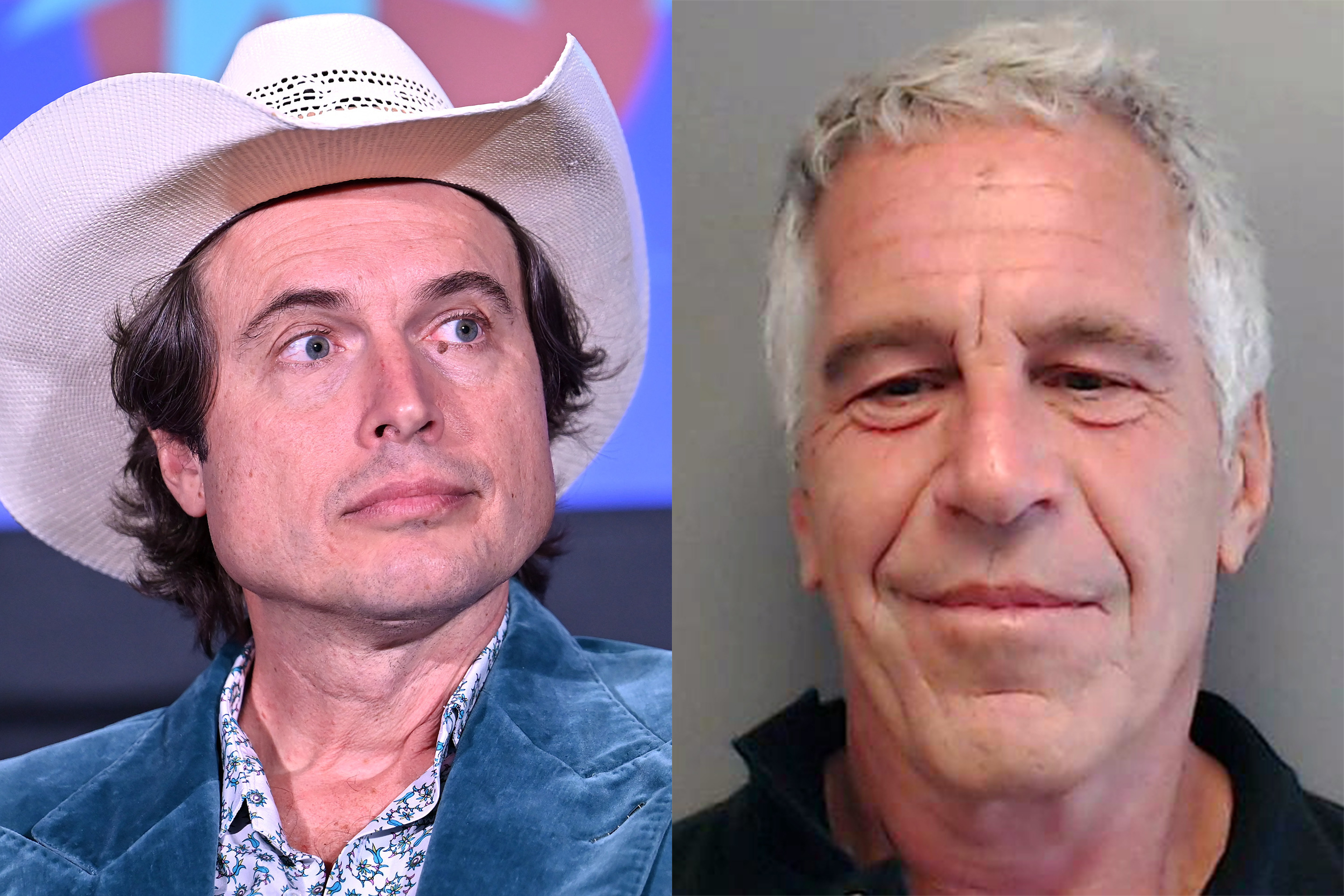
By 2012, Jeffrey Epstein was no longer any kind of secret. He was a convicted sex offender whose sweetheart plea deal had made national news, whose Palm Beach abuses had been chronicled in local and national outlets, and whose name appeared in lawsuits and investigative reporting.
In public, Elon Musk would later say that he had “barely” known Epstein, calling him “obviously a creep,” claiming he had repeatedly declined invitations to the island, and dismissing attempts to link them as smears. In 2019 he told Vanity Fair he had only ever been in the same room with Epstein once; in 2025, as new files dropped, he took to his own platform to call renewed questions “false.”
The 2026 Department of Justice document release complicated that story. Emails from 2012 to 2014 show Epstein inviting Musk to Little St. James and Musk responding along the lines of “sounds good, will try to make it.” In another exchange, Musk mentions being in the Caribbean over the holidays and assumes Epstein will “most likely be on your island,” a tone more consistent with friendly coordination than with disgusted rejection.
The files do not show Musk on Epstein’s flight manifests, nor do they allege that he ever set foot on the island or committed any crime. What they do expose is a gap between public posture and private language, at a time when Epstein’s status was not in doubt.
For Kimbal Musk, Elon’s younger brother and a Tesla board member, the documents land even closer. Emails reveal Epstein’s team arranging for a woman from his circle—later described as one of his “girls”—to attend Kimbal’s birthday party, then monitoring the relationship as it unfolded. The woman has since said, through counsel, that she felt trapped and coerced by Epstein during that period. Kimbal has acknowledged dating her but insists he did not know her connection to Epstein’s wider operation or that the relationship was, in any sense, engineered.
There is no direct evidence that Kimbal understood the full context. There is ample evidence that Epstein was once again doing what he did best: turning people’s private lives into movable pieces on his board.
The markets noticed. In the days after the DOJ email cache became public, Tesla’s share price fell around eight percent over five trading days. Analysts who had once framed the company’s challenges in terms of competition and execution began speaking instead of “reputational overhang.” For a business whose value depends heavily on the myth of its founder as a truth‑telling visionary, discovering that he had massaged, at best, his distance from Jeffrey Epstein was not a trivial detail.
Any future offering tied to Musk—whether a spin‑off, a SpaceX listing, or an xAI IPO—will now live under that cloud. Investors can model cash flows; they cannot easily discount the risk that another tranche of emails, or another flight log, might land at an inconvenient moment.
The last girlfriend and the frozen will
On 8 August 2019, two days before his death, Jeffrey Epstein signed a will moving his estate, then valued at about 577 million dollars, into a structure known as the 1953 Trust. Buried in the paperwork was a name unfamiliar to most of the public: Karyna Shuliak, a Belarusian dentist in her mid‑thirties, widely described in European and U.S. reporting as his last long‑term partner.
According to investigations by outlets including The New York Times and Le Monde, Shuliak was designated to receive roughly 100 million dollars and a portfolio of marquee assets: the Manhattan townhouse, the Paris apartment, Zorro Ranch in New Mexico, the private islands, plus a large diamond ring and other valuables. In his final legal act, Epstein appeared to be trying to secure a future for a single younger woman who had stayed by his side even after his 2008 conviction.
The trust, however, collided with a different reality. In the years since his death, U.S. and French authorities have moved to freeze many of his assets, divert large portions of the estate into victim compensation funds, and scrutinize transfers that might undermine that goal. Shuliak, on paper the prime beneficiary, finds herself effectively behind the victims in line.
Her situation, in miniature, mirrors the world Epstein left: promises made in private, underwritten by his confidence that he could shape outcomes, overtaken by a belated attempt by the system to reckon with the damage he did.
Zorro Ranch and the bodies in the hills
If Epstein’s New York townhouse and Little St. James were the public symbols of his empire, Zorro Ranch was its strange outpost—a sprawling estate south of Santa Fe, ringed by empty hills and rumours.
New Mexico opened a criminal investigation into the ranch in 2019 but, at the request of federal prosecutors in New York, shelved it later that year, even as civil suits and news stories hinted at what might have occurred there. For years, it sat in the background of the Epstein saga: a piece of property without charges attached to it, a setting rather than a case.
In February 2026, that changed. State authorities announced they were reopening the criminal probe into Zorro Ranch, prompted in part by newly unsealed federal files and a 2019 anonymous email alleging that Epstein had ordered the bodies of two foreign girls buried near the estate. Reuters reported that the email, sent to federal investigators, described the supposed burials in enough detail that New Mexico’s attorney‑general now considers it serious enough to warrant fresh forensic work.
The state has requested full, unredacted access to all federal Epstein files tied to Zorro Ranch, and lawmakers have created a bipartisan four‑member “Epstein truth commission” to take testimony and examine how the original investigation was handled. One member, representative Andrea Romero, told the BBC they were learning of alleged prior reports to the FBI about bodies and trafficking connected to the property. Officials emphasize that the burial claim remains an allegation, not a proven fact—but one grave email is now bending law‑enforcement resources back toward a place the system had once agreed not to look at too hard.
Even without a single shovel in the ground, the image of unmarked graves on a billionaire’s ranch has seared itself into public imagination. It has become shorthand for how far Epstein seemed to believe his isolation and influence extended: far enough that he could, allegedly, make human beings disappear into the landscape. Whether the investigation proves or disproves that claim, the fact that it is being pursued at all marks a shift.
Files, failures, and the long tail
From 2020 onward, waves of documents have been pried out of government custody and into public view under laws dubbed the “Epstein Files” transparency measures. Millions of pages—FBI 302s, civil‑case exhibits, bank records, flight logs, internal memos—have been scanned, OCR’d, and poured over by journalists, lawyers, and ordinary obsessives.
Certain themes recur. The 1996 Maria Farmer file, once a forgotten entry in an FBI database, has become the canonical example of an early, specific, credible allegation involving minors that was shelved. Florida case documents reveal exploited girls being called “prostitutes,” a linguistic manoeuvre that blunted outrage and justified milder charges. Suspicious‑activity reports and internal correspondence from banks like JPMorgan and Deutsche Bank show compliance officers raising questions about Epstein’s accounts, only to be overruled or appeased.
Internal FBI documents, originally released with heavy redactions, have come back into the light with fewer black boxes after congressional pressure. They show that names like Wexner were not absent from investigative thinking; they were merely absent from the indictments.
For institutions, the fallout has been reputational and, in some cases, financial. Banks have paid fines and watched their risk departments hauled into hearings; universities have returned or redirected tainted donations; media organizations have had to explain prior editorial decisions; law‑enforcement agencies have been forced to explain why certain leads were deemed not worth following.
For some of the men in Epstein’s orbit who have not faced criminal charges, the punishment has been stranger: permanent, searchable, context‑free association. A name in a flight log, a line in a deposition, an email greeting—little artefacts that, out of context, might mean everything or nothing, but that now live forever in the cloud, ready to be rediscovered whenever the next scandal crests.
The fall of a prince
No one has embodied the slow‑motion cost of that exposure more clearly than Andrew Mountbatten‑Windsor, formerly known as Prince Andrew, Duke of York. Once cast as the “playboy” son of the British monarch, Andrew’s public role collapsed after he settled a civil sexual‑abuse lawsuit brought by Virginia Giuffre in 2022, without admitting liability. Stripped of military titles and royal patronages, he retreated from public life.
In February 2026, he was pulled back into the spotlight on very different terms. British police arrested Andrew on suspicion of misconduct in public office, as part of an investigation into whether, while serving as the UK’s special representative for international trade and investment, he had shared confidential information or otherwise abused his position in dealings that touched Epstein. Officers searched a property in Norfolk associated with him; after questioning, he was released under investigation, with no charges filed at the time of writing. He has denied wrongdoing.
The image of detectives combing through the estate of a man who once represented Britain’s interests abroad underscored how far the ground has shifted. Titles and traditions have not insulated Andrew from the gravitational pull of Epstein’s name; if anything, they have made the spectacle of accountability more pointed. In the United States, lawmakers watching the British case unfold have responded with a simple question: “Who’s next?”—which other supposed untouchables are still quietly hoping their own file never makes it out of the archives.
Virginia, and what remains
By now, it is tempting to treat Jeffrey Epstein as a grotesque anomaly, a lightning strike no system could reasonably have been expected to anticipate. The documents, and the lives stitched through them, tell a harsher story. At almost every stage—school, home, foster care, law enforcement, media, banking, philanthropy, intelligence, royalty—someone saw enough to act and chose not to.
In that sense, Virginia Giuffre’s life is not an adjunct to the narrative. It is its core. From the “troubled home” where she says her first abuser was her own father, through the streets of Miami where Ron Eppinger scooped her up, through a “jail‑like” school, an FBI raid, a trailer in Loxahatchee, a job at a club owned by a future president, and finally into the hands of a man the state of Florida and the federal government had every opportunity to stop years earlier, she traced the path of least institutional resistance.
Her courage did not consist in a single explosive revelation but in repetition. She told and retold her story—to police, to civil lawyers, to journalists, to readers of her memoir—each time naming men and moments others would have preferred to forget. Each time she was dismissed, shamed, or sued, she widened the frame, insisting that her life was evidence not just against one predator but against the culture that protected him.
Epstein denied the world the parenthesis everyone expected: a long criminal trial, a verdict, the sight of him on a witness stand forced to answer questions he had spent a lifetime dodging. In that narrow sense, he succeeded; he chose his exit, and no court will ever pronounce a full accounting of his crimes. But in a larger sense, he lost control of the story the moment women like Virginia refused to go away.
Their efforts have dragged banks, universities, ministries, courts, and even royal households into uncomfortable light. They have redirected much of the fortune he tried to seal away into funds for victims. They have prompted new investigations into old ground, like the reopened probe at Zorro Ranch. They have made it impossible for politicians, CEOs, and princes to pretend that sitting next to Jeffrey was just another social misstep.
Virginia’s suffering, viewed from this distance, revealed something about human nature that no psychological profile of Epstein ever could: how easily people will align themselves with whatever story lets them avoid seeing, and how stubbornly the truth returns when those who were hurt refuse to disappear. She is gone in the sense that the girl who walked into Mar‑a‑Lago’s spa no longer exists; Epstein is gone in the sense that he will never answer a question again. But the world they leave behind is one in which “The Talented Mr Epstein” no longer reads as a clever profile title but as a warning label.
The men who orbited him—princes, fund managers, fixers, technologists—will go on issuing statements, reshuffling boards, and, in some cases, taking companies to market. Some will prosper, some will rebrand, a few may manage to persuade parts of the public to forget. Yet they now operate in an environment where archives do not forget, where an anonymous email about a ranch can reopen a criminal inquiry, where an old “sounds good, will try to make it” in a billionaire’s inbox can knock eight percent off a stock.
For people who once believed they were untouchable, that uncertainty may be the closest thing to justice this story can offer.
VIRGINIA GIUFFRE'S LEGACY LIVES ON THROUGH Speak Out, Act, Reclaim (SOAR)
Transparency Disclosure: This site is funded by our community. When you click our affiliate links, we may earn a small commission at no extra cost to you. 100% of these funds go toward our monthly Cloudflare infrastructure costs to keep this site fast and secure for everyone.
Written by M.G. Sterling 2026
"A reporter tells you the building is on fire. Sterling tells you it was built to be an oven."
"Take from the rich, give to the hungry. Sterling decodes modern-day narratives from economics to biotech and humanity. You are not his client, you are his brother or his sister. Sterling HAS your back as long as he can stand."

The February 26 talks in Geneva produced precisely zero physical results. Despite U.S. envoys Steve Witkoff and Jared Kushner presenting demands for the dismantlement of the Fordow, Natanz, and Isfahan nuclear facilities—and the transfer of Iran's approximately 10,000kg enriched uranium stockpile to American custody—Tehran emerged from the session with its enrichment infrastructure fully intact and its centrifuges still spinning.
Oman’s Foreign Minister Badr Albusaidi characterized the outcome as significant progress, but Iranian officials broadcasted their unyielding position immediately after talks concluded they will not cease enrichment, will not transfer uranium abroad, and will not discuss ballistic missiles or regional proxy support. The general understanding allegedly reached amounts to little more than an agreement to schedule more bureaucratic discussions.
The Capitulation From Carriers to Committees
The pivot to technical-level IAEA talks in Vienna—scheduled for March 2—represents a conspicuous retreat from President Trump's stated 10-to-15-day ultimatum. Trump had warned Tehran on February 19 that failure to produce a meaningful deal within roughly two weeks would trigger really bad things, backing that threat with two carrier strike groups positioned in the Persian Gulf.
Yet rather than extracting tangible concessions before the deadline expires, Washington agreed to delegate verification and monitoring discussions to the IAEA—a move that transforms a military countdown into an open-ended bureaucratic process. The U.S. has effectively accepted Iran's refusal to dismantle Fordow or transfer its uranium stockpile, temporarily trading the threat of airstrikes for the prospect of technical discussions that Tehran can manipulate for weeks or months.
Iran's Playbook Stall, Survive, Spin
Tehran's strategy in Geneva demonstrates its mastery of nuclear brinkmanship. By agreeing to IAEA technical talks while explicitly rejecting the dismantlement of fortified underground sites like Fordow, Iran achieves a diplomatic human shield against military action. The IAEA's presence makes strikes politically and environmentally unviable without eliminating the actual threat—Iran's retained uranium stockpile and scientific expertise.
Iranian Foreign Minister Abbas Araghchi publicly declared that Tehran has entered the components of a deal and will sit for a fourth round of talks. Crucially, however, Iran has compartmentalized the negotiations to exclude its ballistic missile program and support for regional proxies including Hezbollah, Hamas, and the Houthis—the very capabilities that constitute the most immediate threat to regional stability.
The Knowledge Problem
Even if the IAEA eventually gains access to Fordow, the fundamental flaw in the current approach remains dismantling physical facilities does not eliminate Iran's technical know-how. The country has already demonstrated its ability to recover enrichment capacity following the June 2025 strikes. Washington's laser focus on inspections and verification ignores the reality that Iran's nuclear scientists retain the expertise to rebuild the program.
The Clock Runs Out on Credibility
Trump's ultimatum expires around March 5-6—coinciding with the IAEA Board of Governors meeting in Vienna. If the administration accepts further procedural delays rather than physical dismantlement or uranium transfer, it will confirm what regional actors already suspect the maximum pressure campaign was a bluff, and Washington has capitulated to Iran's preferred timeline.
The coalition that backed decisive action has watched Washington trade military leverage for bureaucratic engagement. Unless Iran ships its enriched uranium stockpile out of the country and permits the verifiable destruction of Fordow's centrifuges by the stated deadline, Geneva will mark not a diplomatic breakthrough, but a dangerous precedent—demonstrating that nuclear threshold states can stall their way out of American ultimatums.
Written by M.G. Sterling 2026
"A reporter tells you the building is on fire. Sterling tells you it was built to be an oven."
"Take from the rich, give to the hungry. Sterling decodes modern-day narratives from economics to biotech and humanity. You are not his client, you are his brother or his sister. Sterling HAS your back as long as he can stand."
Transparency Disclosure: This site is funded by our community. When you click our affiliate links, we may earn a small commission at no extra cost to you. 100% of these funds go toward our monthly Cloudflare infrastructure costs to keep this site fast and secure for everyone.
For decades, the cultural narrative has framed drug use as a failure of willpower—a weakness of character, a failure of discipline, or a moral lapse. But this framework is not only scientifically illiterate; it actively harms millions by misdiagnosing a structural neurological problem as a personal one. The emerging truth, supported by neurobiological research, is far more complex Drug use is often a biological survival response for a brain whose natural reward pathways have been dismantled by trauma.
The Dopaminergic Floor and the Trauma That Shatters It
In a healthy brain, tonic dopamine provides a physiological floor—a steady baseline of motivation, engagement, and the capacity to feel pleasure. Early-life trauma acts as a synaptic wrecking ball on this system. Research demonstrates that childhood trauma is significantly associated with altered dopamine release capacity in the ventral striatum, a critical region for reward processing. Individuals with PTSD consistently show low levels of dopamine and reduced reactivity in neural reward areas.
This isn't metaphorical. When this dopaminergic floor falls out, the individual doesn't simply feel sad—they experience anhedonia, a profound, leaden inability to process reward or generate drive. The brain's primary engine for motivation has been physically compromised.
Adrenergic Compensation The Hidden Cost of Survival
When the primary dopaminergic system fails, the brain does not surrender—it recruits the sympathetic nervous system to brute force energy and function. This is what researchers call adrenergic compensation
The Adrenaline Spark Lacking dopamine to initiate action, the brain floods the system with norepinephrine and cortisol to create a state of high-alert survival. The HPA axis—normally a regulated stress response system—becomes chronically activated.
Post-Adrenergic Cortisolisation This creates the tired but wired paradox. You're physically exhausted because glycogen stores are drained by constant stress hormones, yet the mind races in a state of hyper-vigilance. Chronic reliance on this stress response creates allostatic load—the progressive wear and tear on the body that accumulates when the system is forced to survive on emergency power.
The Lipophilic Bypass When the Brain Forces Entry
This is where substances enter not as party drugs but as functional neurological tools. Lipophilic compounds—drugs like ketamine (a ketone-amine), heroin, methamphetamine, and other stimulants—don't wait for the brain's damaged traditional pathways. They cross the blood-brain barrier through passive diffusion, effectively forcing their way into the central nervous system.
For someone living in a dopaminergic void, a drug becomes a pharmacological bypass that
Restores the Floor Temporarily provides the dopamine or glutamate signal that the trauma-damaged brain can no longer produce naturally
Silences the Alarm By restoring a sense of reward, it allows the overactive adrenergic system to finally stand down, often providing the only true physiological rest the user can find
The rapid entry of heroin into the brain—100 times faster than morphine due to its lipophilicity—demonstrates why certain substances become so addictive they provide immediate relief to a system that has lost its ability to self-regulate.
Not Weak, Just Different
The addicted brain is not a weak brain—it is a hacked brain that has been forced to adapt to a world where its natural equipment was insufficient. The transition to dependency is a survival reflex, an attempt to balance a neurochemical equation that trauma has skewed toward permanent deficit.
Drug users are often the most resilient individuals, having operated for years on emergency power (adrenaline) before finally finding a bypass that allows them to feel human again. The failure is not in their character—it is in a medical framework that treats the symptom (drug use) while ignoring the structural debt (trauma-induced dopamine depletion and HPA axis dysregulation) that made substance use a biological necessity.
The Biological Reality of Choice
When we understand that trauma alters the very architecture of the dopamine system—reducing receptor density, impairing neurotransmitter synthesis, and sensitizing the stress axis—the concept of choice in addiction becomes obsolete. The brain is not choosing pleasure; it is seeking the restoration of a baseline that trauma destroyed.
The implication is radical but necessary We must stop treating drug users as criminals or moral failures and start understanding them as individuals with quantifiable neurobiological injuries requiring targeted intervention. The current framework of shame and punishment only compounds the allostatic load, pushing the brain further into the compensatory stress cycles that drive dependency in the first place.
Written by M.G. Sterling 2026
"A reporter tells you the building is on fire. Sterling tells you it was built to be an oven."
"Take from the rich, give to the hungry. Sterling decodes modern-day narratives from economics to biotech and humanity. You are not his client, you are his brother or his sister. Sterling HAS your back as long as he can stand."
The Iranians have spent two years laughing at us. While Western diplomats clutched their pearls and spoke of "confidence-building measures," Tehran marched straight past every red line, enriching uranium to 60%—a threshold reserved solely for atomic weapons fabrication—and then had the gall to refuse exporting a single gram of the material. Their latest offer to "down-blend" this weapons-grade stockpile to 20% while keeping every ounce on Iranian soil isn’t diplomacy; it’s a middle finger wrapped in bureaucratic language. Enriching beyond 3.5% civilian grade was the original sin. Racing to 60% was a declaration of intent. Refusing to ship it out while proposing dilution is doubling down on deception. We are not dealing with a misunderstood regime seeking peaceful energy. We are dealing with a theocratic dictatorship sprinting toward a nuclear bomb, and it is time to treat them as the existential threat they are.
This requires more than surgical strikes on centrifuges. It demands regime change—full stop.
The mullahs have forfeited their right to rule through serial bad faith. When they buried the Fordo facility under ninety meters of mountain concrete, they weren’t planning a civilian power grid. When they enriched to 60%, they crossed the Rubicon into weapons-grade territory, knowing full well that 90% is merely a technicality away. Now, facing Trump’s entirely justified ultimatum, they offer to dilute their stockpile to 20%—still far beyond any civilian necessity—while clinging to their "red line" of domestic enrichment. This is not a compromise. It is a stall tactic designed to buy time for the final sprint to weaponization. A regime that conducts itself in such blatant bad faith, that treats international law as a shield for its weapons program, cannot be negotiated with.
It must be dismantled.
Which brings us to the gutless betrayal in London. When Keir Starmer blocked U.S. access to RAF Fairford and Diego Garcia—bases we have operated from for decades—he didn’t just inconvenience the Pentagon; he knifed his closest ally in the back days before a potential shooting war. Citing ICC liability fears while American carriers steam toward the Gulf is the geopolitical equivalent of hiding under the desk. This is a dog move, pure and simple: taking the benefits of the Anglo-American security umbrella while refusing to shelter the very forces that provide it. Trump was right to kill the Chagos Islands deal and bypass Britain entirely. If the UK lacks the spine to host the bombers that keep the world safe, then they can watch from the sidelines as Jordan and Israel do the heavy lifting. The Special Relationship cannot survive when one partner is only interested in taking potshots from the safety of the gallery.
Military action is not only justified now; it is obligatory. The B-2s at Whiteman and Guam stand ready with GBU-57 bunker busters capable of turning Fordo into a smoking crater. Two carrier strike groups—unprecedented since 2003—provide the air dominance needed to keep our pilots safe while we dismantle the Islamic Revolutionary Guard Corps command structure. The plan should not stop at the nuclear facilities. We must hit Khamenei’s hardened bunkers beneath Tehran, cripple the IRGC with cyber warfare, and decapitate the leadership that has held sixty million Iranians hostage since 1979. Khamenei hiding in civilian bunkers isn’t a moral dilemma; it is proof of his cowardice and the fragility of his grip on power. The Iranian people, starving and furious during Ramadan, will not mourn the destruction of the apparatus that has impoverished them. They will seize the opportunity we provide.
Iran chose this path. They chose to cheat on the JCPOA. They chose to enrich to 60%. They chose to refuse exports. They chose to sponsor Hezbollah and put IRGC officers in charge of missile batteries in Lebanon where they endanger our Lebanese allies. Every attempt at engagement has been met with deception. The only language this regime understands is the thunder of 30,000-pound penetrators and the collapse of their security architecture. We should not merely bomb their nuclear sites; we should topple their government, secure the reactor complexes, and hand the keys back to the Iranian people. Anything less leaves the world with a permanent North Korea in the Middle East, armed with ballistic missiles and a messianic death wish.
The forty-eight hours expire soon. When Araghchi’s worthless paper arrives, the only proper response is the sound of afterburners lighting up the night sky over the Zagros Mountains. No more deals. No more dilutions. No more British vacillation. Time to finish this.
Transparency Disclosure: This site is funded by our community. When you click our affiliate links, we may earn a small commission at no extra cost to you. 100% of these funds go toward our monthly Cloudflare infrastructure costs to keep this site fast and secure for everyone.
The Longest Watch: The USS Gerald R. Ford Approaches Historical Record
For more than eight months, the sailors of the USS Gerald R. Ford have sailed across seas and through storms, answering every call their nation has made of them. Their deployment, now marching past 240 days at sea, stands on the precipice of breaking records not seen since the Vietnam War era—a testament to American resilience, sacrifice, and unwavering commitment to freedom.
A Mission Without End
When the USS Gerald R. Ford steamed out of Naval Station Norfolk, Virginia on June 24, 2025, her crew of more than 4,500 sailors embarked on what they believed would be a standard deployment. No one could have predicted that their journey would stretch across three continents, through multiple combat operations, and now toward one of the longest carrier deployments in modern American history.
The Ford's mission chain reads like a chronicle of American resolve. First, she sailed to the Mediterranean, standing watch over European waters and conducting operations alongside NATO allies. Then, in an unexpected turn, she was rerouted across the Atlantic to the Caribbean, where her warplanes participated in Operation Southern Spear—one of the largest U.S. military buildups in the Caribbean in decades. On January 3, 2026, her aircraft supported the operation that captured Venezuelan President Nicolás Maduro, bringing a notorious dictator to justice.
But the mission was not done. In February 2026, President Trump ordered the Ford redeployed yet again—this time to the Middle East, where she will join the USS Abraham Lincoln in the Persian Gulf amid rising tensions with Iran.
Approaching History
As of mid-February 2026, the Ford has been deployed for approximately 241 days. By the time she reaches the Middle East, that number will approach 250 days. If she remains on station past mid-April, she will surpass the post-Vietnam War record of 294 days—a milestone that has stood for decades.
Should her mission extend into May, the Ford could exceed 300 days at sea, approaching lengths not seen since the USS Midway's legendary 332-day deployment during the height of the Vietnam War in 1972-73.
The Human Cost of Readiness
Behind these statistics are families stretched thin across the calendar. Spouses have celebrated anniversaries alone. Children have taken their first steps, spoken their first words, and marked birthdays while their mothers and fathers patrolled distant waters. The sailors of the Ford have missed holidays, graduations, and the quiet moments that bind families together.
The physical toll is equally demanding. The Ford's crew has conducted tens of thousands of flight deck operations, fueling evolutions, and maintenance routines. They have sailed through the Strait of Gibraltar, crossed the Atlantic twice, and stood watch through countless nights. Their ship, America's newest and most advanced aircraft carrier, has been pushed to its operational limits—delaying critical maintenance and shipyard time that keeps the fleet ready for the next crisis.
American Steel, American Spirit
The USS Gerald R. Ford represents the pinnacle of American naval engineering—nuclear-powered, carrying more than 75 aircraft, and equipped with the most sophisticated radar and defense systems ever put to sea. But it is the human spirit of her crew that transforms steel and technology into an instrument of American will.
These sailors did not ask for a record-breaking deployment. They did not volunteer to spend nearly a year away from home. Yet when their nation called—first to the Mediterranean, then to the Caribbean, now to the Persian Gulf—they answered with the same courage that has defined the American sailor for generations.
Their deployment is a reminder that the price of security is not paid in ships or aircraft, but in the time away from loved ones, the missed milestones, and the quiet resolve of those who stand watch while the rest of America sleeps.
A Legacy of Sacrifice
The Ford's sailors join a long line of Americans who have served extended deployments in defense of liberty. From the Pacific campaigns of World War II to the Vietnam-era carriers that set records still spoken of with reverence, American service members have always stepped forward when freedom required it.
Today, the men and women of the USS Gerald R. Ford write their own chapter in that legacy. Whether they break the record or return home tomorrow, their sacrifice stands as proof that the American sailor remains ready—wherever the mission leads, for as long as duty demands.
Written by M.G. Sterling 2026
"A reporter tells you the building is on fire. Sterling tells you it was built to be an oven."
"Take from the rich, give to the hungry. Sterling decodes modern-day narratives from economics to biotech and humanity. You are not his client, you are his brother or his sister. Sterling HAS your back as long as he can stand."
Transparency Disclosure: This site is funded by our community. As an Amazon Associate I earn from qualifying purchases. 100% of these funds go toward our monthly Cloudflare infrastructure costs to keep this site fast and secure for everyone.
The Department of Justice is currently performing a masterclass in political whiplash. In a span of 48 hours, the Epstein investigation has gone from a "mismanaged priority" to something the administration claims should no longer exist.
The Bondi-Blanche Pivot
On April 2, 2026, President Trump fired Attorney General Pam Bondi, citing her "poor handling" of the Epstein files. The irony was immediate: Bondi was ousted for failing to weaponize the documents effectively, yet her replacement, Acting AG Todd Blanche, instantly declared the case "closed."The administration's logic is dizzying: Bondi was too incompetent to release the files, so now the files simply won't be released.
The 30-Day Countdown
Blanche has stepped into a legal minefield. Under the Epstein Files Transparency Act of 2025, the DOJ is legally mandated to release the remaining 2.5 million pages of evidence. Representative Thomas Massie and a bipartisan coalition have issued a "Sword of Damocles" ultimatum: * Deadline: May 3, 2026. * The Stake: Potential criminal liability for the Acting AG. * The Gap: While the DOJ claimed completion in January, Congress maintains that half the files remain hidden.Loyalty vs. Liability
Todd Blanche—Trump’s former personal defense attorney—now faces an impossible choice. He can either follow the law and risk exposing "uncomfortable" truths, or protect his patron and risk contempt charges.This tactical shift suggests the Epstein files were never about justice; they were political leverage. When the documents failed to produce a "smoking gun" against rivals—and started revealing messy redactions instead—the administration’s interest evaporated.
Blanche is betting that institutional norms will break before his political resolve does. But with a May deadline looming, the "quiet part" is now being shouted from the rooftops: transparency was only ever a goal when it was convenient.
Strategic Audit: Operation Epic Fury
The Unspoken Ledger of Unilateral Intervention
A cold accounting of capital, steel, and blood expended against the 2026 strategic reality
Preface: The "Good Faith" Asterisk
Before the numbers, a necessary caveat: The administration's core objective—preventing Iranian nuclear weapons capability—is not illegitimate. The concern that a revolutionary theocracy with ballistic missile reach shouldn't possess the ultimate weapon is shared across the American political spectrum and among serious allies. The failure isn't intent. The failure is execution architecture—the substitution of theatrical violence for strategic patience, and nationalist slogans for alliance coordination. What follows is the audit of that substitution.
I. The Munitions & Logistics Ledger: A $15 Billion Expenditure
| Expenditure Category | Estimated Quantity/Duration | Unit Cost (2026 USD) | Total Estimated Cost |
| Tomahawk Block V | ~1,200 | $2.5 million | $3.0 billion |
| AGM-114R Hellfire | ~4,500 (drone/helo strikes) | $150,000 | $675 million |
| JDAM Guidance Kits | ~7,300 (gravity bombs) | $35,000 | $255 million |
| Fuel & Flight Hours | ~25,000 sorties (F-35/F/A-18) | $38,000/hour (avg) | $1.9 billion |
| Carrier Group Ops | 33 days (2 strike groups) | $8 million/day | $528 million |
| Domestic Oil Cost | ~$12.50/barrel sustained impact | consumer burden | $8.2+ billion |
| TOTAL DIRECT COST | | | ~$14.5 billion |
The Audit Finding: We have expended approximately 15% of theater-ready precision munitions to destroy above-ground nuclear infrastructure at Natanz and Isfahan. These were genuine assets—centrifuge halls, cascade facilities, industrial infrastructure that took years and billions to construct. The failure is not that the targets were valueless; it is that they were static targets hit after the mobile threat—uranium stockpiles, enrichment equipment, technical documentation—had been relocated to Fordo and other deep-mountain facilities. We destroyed buildings that had been hollowed of their critical contents through Iranian forewarning and dispersal.
This is readiness depletion for a Pacific contingency—against China, the pacing threat—transferred into an operation that damaged but did not dismantle the nuclear program.
II. The Human Tally: Civilian Casualties and Strategic Consequences
The most devastating costs are measured in lives lost and communities shattered.
#### A. Iranian Military & Security (IRGC/Basij)
- Casualties: ~2,100+ killed (first month estimates)
- Strategic Effect: The "decapitation" narrative is misleading. While Ali Khamenei's assassination removed the clerical figurehead, the IRGC command structure—General Hossein Salami, the Quds Force echelons, the Basij militia coordination—remains functionally intact. The removal of religious authority structures that previously exercised some restraint over military operations has left the IRGC with reduced institutional checks on its autonomy.
#### B. Iranian Civilians
- Total Confirmed Deaths: 1,443 (per HRANA, late March 2026)
- Child Fatalities: 217+
- Defining Incident: The Shajareh Tayyebeh school strike in Hormozgan, where 34 children were killed, represents an operational failure with lasting consequences. These deaths provide the IRGC with authentic grievance material that transcends propaganda, contributing to radicalization among survivors and their communities. The moral tragedy is primary; the strategic blowback is a secondary consequence of failing to prevent civilian casualties.
III. The Shift in Iranian Governance
The removal of Ali Khamenei and the clerical establishment has altered the structure of Iranian power, not necessarily in ways that advance Western interests.
| Element | Pre-Operation | Post-Operation |
|:---|:---|:---|
| Supreme Leader Authority | Ali Khamenei as final arbiter, with religious legitimacy constraining military autonomy | Interim Leadership Council with Mojtaba Khamenei as civilian figurehead; reduced religious constraints on IRGC operations |
| IRGC Position | Powerful military force operating within a theocratic framework | Dominant institution with diminished institutional checks; General Salami as effective national leader |
| Regime Incentives | Hostile but predictable; diplomatic channels available; nuclear negotiations possible | Cornered actor with reduced diplomatic options; potential existential incentive for nuclear breakout |
The strikes eliminated the religious establishment that provided some moderating influence and international interface capability. What remains is a military-led structure with fewer internal constraints and greater operational autonomy.
IV. The Alliance Capital Ledger: 80 Years for 30 Days
| Asset | Pre-Operation Value | Post-Operation Value | Depreciation |
|:---|:---|:---|:---|
| NATO Article 5 Credibility | Unquestioned security guarantee | Conditional, transactional | Severe |
| European Energy Coordination | Diversified dependency management | Fractured national responses | Critical |
| Asian Ally Confidence (Japan, SK, Australia) | Extended deterrence reliability | Questioning U.S. staying power | Significant |
| UN Security Council Leverage | P5 coordination potential | Isolated veto position | Near-total |
The "get your own oil" rhetoric and unilateral action followed by withdrawal posture demonstrate that American security commitments are subject to immediate domestic political calculation. This perception undermines the extended deterrence framework that has prevented major power conflict for eight decades.
V. The Indo-Pacific Opportunity Cost
While 2 carrier groups rotated through the Gulf:
- PLA Navy conducted record exercises simulating Taiwan blockade scenarios
- Chinese hypersonic missile tests proceeded without U.S. technical intelligence assets in position (redeployed to Iran)
- Regional partners (Philippines, Vietnam) observed American resource prioritization and recalculated hedge strategies
The Question Unasked: What does $15 billion in Pacific deterrence—submarine procurement, island air defense, allied capacity-building—buy compared to strikes on facilities from which critical materials had been evacuated?
VI. The Alternative Architecture: What "Done Right" Looks Like
The critique demands constructive alternative. Here's the pathway not taken:
Phase 1: Diplomatic Encirclement (Months 0-12)
- P5+1 Revival with Teeth: Reconstitute the nuclear monitoring framework with automatic trigger mechanisms—any enrichment above 20% triggers immediate snapback sanctions, no veto possible - Regional Security Dialogue: Bring Israel, UAE, Saudi Arabia into formal coordination (the "Abraham Accords 2.0" framework) to present unified non-proliferation front - Economic Leverage Surge: Targeted sanctions on IRGC commercial networks, not broad population punishmentPhase 2: Credible Coercion (Months 6-18)
- Demonstrative, Not Exhaustive, Force: Limited strikes on actual proliferation assets (enrichment cascades in transit, not facilities after evacuation), paired with explicit messaging: "We can reach what you move" - Alliance Integration: NATO Article 4 consultations before action, ensuring shared burden for aftermath - Off-ramp Preservation: Maintain diplomatic channels to non-IRGC Iranian actorsPhase 3: Strategic Patience (Ongoing)
- Containment, Not Rollback: Accept that regime evolution is a generational project, not a 30-day bombing campaign - Nuclear Breakout Prevention: Focus on material denial—interdiction of centrifuge components, not symbolic facility destruction - Alliance Reinvestment: Use the crisis to strengthen NATO energy coordination, not fracture itEstimated Cost: ~$2-3 billion over 3 years (intelligence, limited deterrence displays, economic tools)
Estimated Casualties: Near-zero direct; avoidance of 1,600+ deaths
Strategic Outcome: Contained threat, intact alliances, preserved Pacific readiness
VII. The Domestic Economic Impact: Energy Market Reality
The administration's "energy independence" narrative encounters structural economic constraints:
- Refinery Configuration: U.S. refineries are engineered for heavy sour crude (high sulfur, dense), primarily imported from Canada, Mexico, and the Middle East. Domestic shale produces light sweet crude (low sulfur, thin)—chemically mismatched to existing infrastructure. Domestic production volume does not equate to domestic refining capacity.
- The Jones Act: Requires U.S.-flagged, U.S.-crewed vessels for domestic transport, limiting supply flexibility and increasing costs during regional shortages.
- Global Price Integration: Oil is a fungible global commodity. West Texas Intermediate prices track Brent crude. Strait of Hormuz instability affects American consumer prices regardless of domestic production volume.
The Consumer Impact: Prices rose immediately upon operation commencement and remain elevated. The "rocket and feather" phenomenon—rapid increases followed by slow declines—transfers war costs to consumers while wholesalers maintain margins.
VIII. The Final Audit Verdict
Operation Epic Fury demonstrates the gap between tactical execution and strategic outcome.
Expenditures: ~$14.5 billion, 15% of theater-ready precision munitions, 2 carrier groups for 33 days
Casualties: 1,443+ Iranian civilians including 217 children; ~2,100+ military/security personnel
Facilities Destroyed: Above-ground infrastructure at Natanz and Isfahan—genuine assets, but struck after critical materials and equipment had been evacuated
Political Transformation: Removal of clerical establishment; consolidation of IRGC-led governance with reduced internal constraints
Alliance Impact: Severe degradation of NATO credibility and Asian partner confidence
Pacific Readiness: Degraded through munitions expenditure and asset diversion
Nuclear Program Status: Damaged but not dismantled; uranium stockpiles and enrichment capability persist in fortified mountain facilities
The administration prepares to declare mission completion and withdraw. What remains is a more militarily dominated Iranian regime with potential existential incentive for accelerated nuclear breakout, alliance structures weakened by demonstrated American unilateralism, and depleted readiness against the pacing threat in the Pacific.
The uranium continues to exist. The alliances continue to fray. And the next phase of this conflict—whether managed by the United States or inherited by successors—begins from a position of reduced leverage and increased risk.
The Manufactured Culture War: How America Turned Peace Activists into Public Enemy #1
When Dissent Became Treason
In the mid-1960s, as body bags returned from Southeast Asia in mounting numbers, a generation of young Americans did something unprecedented: they rejected the script. The "hippies"—a loose coalition of students, artists, and idealists—emerged not as radicals, but as the first mass movement to question whether the Vietnam War was worth fighting at all.
They were right. History would vindicate them completely.
But being right wasn't enough. The U.S. government, unable to win the war abroad, declared a different one at home—against its own citizens.
The Invention of the "Hippie Threat"
The counterculture that blossomed in San Francisco's Haight-Ashbury and spread across America was never primarily about fashion or drugs. At its core, it was an anti-war movement. The same young men who faced conscription into a conflict they didn't understand chose instead to resist, to protest, to ask the questions their government wouldn't: Why are we here? What are we fighting for? Who benefits?
These were reasonable questions. They remain reasonable today.
The response from Washington was not reason—it was war by other means.
COINTELPRO, the FBI's secret domestic surveillance program, didn't merely monitor protesters—it sought to destroy them. Agents infiltrated anti-war groups, planted false evidence, spread malicious rumors to fracture alliances, and even encouraged violence to discredit peaceful movements. The Bureau's explicit goal, as stated in internal documents, was to "expose, disrupt, misdirect, discredit, or otherwise neutralize" these groups .
The CIA, legally barred from domestic operations, ran Operation CHAOS anyway, spying on American citizens who opposed the war. The Huston Plan drafted by the Nixon administration proposed illegal mail openings, burglaries, and expanded surveillance specifically targeting student activists .
This wasn't law enforcement. This was political warfare against lawful dissent.
The "Silent Majority" and the Politics of Division
In 1969, President Richard Nixon didn't argue the merits of the war. Instead, he changed the subject. In a televised address, he called upon "the great silent majority" of Americans—implying that the protesters were not merely wrong, but illegitimate, unrepresentative, and un-American.
The framing was deliberate and devastating. Anti-war activists weren't fellow citizens with a different view; they were a "vocal minority" threatening the social order. "Law and order" became code for suppressing dissent. Protest became "mob rule." Questioning the war became betrayal of the troops.
This rhetorical strategy accomplished what battlefield success could not: it shifted the debate from whether the war was just to whether protesters were patriotic.
The Hard Hat Riot of 1970 exemplified this manufactured division. When construction workers attacked student protesters in New York City following the Kent State shootings, Nixon didn't call for calm—he invited the union leaders to the White House, endorsing their violence as "pro-America" patriotism .
The message was unmistakable: there were two Americas, and only one was legitimate.
History's Verdict
The hippies lost the culture war. They were surveilled, arrested, beaten, and vilified. By the mid-1970s, the movement had fragmented, its members absorbed into mainstream society or retreating to rural communes.
But history has rendered a different judgment entirely.
The Vietnam War, which cost over 58,000 American lives and millions of Southeast Asian casualties, is now universally regarded by historians and policymakers as a catastrophic error—a war of choice built on false premises and sustained by political inertia rather than strategic necessity .
The protesters were right. The "silent majority" was wrong. The patriots were those who questioned, not those who obeyed.
The Template
The machinery developed to crush the anti-war movement—the surveillance, the demonization of dissent, the artificial polarization of "real Americans" versus "radical elites"—did not disappear when Saigon fell. It became the template.
Every subsequent American culture war, from the "War on Drugs" to contemporary political polarization, bears the fingerprints of this original sin: the transformation of policy disagreement into existential conflict, the recasting of opposition as enemy action, the willingness to destroy citizens rather than engage their arguments.
The hippies weren't the threat. The threat was a government so threatened by peaceful dissent that it declared war on its own people—and in doing so, taught future administrations that democracy's safeguards could be bypassed if the enemy within was frightening enough.
They were right about the war. They were right about the surveillance. They were right about the manufactured divisions.
History remembers. Even if the culture won.
Sources:
: COINTELPRO operations against anti-war groups, FBI records
: The Huston Plan and Operation CHAOS, declassified intelligence documents
: Hard Hat Riot and Nixon's response, 1970 White House records
: Historical consensus on Vietnam War, multiple academic assessments
Written by M.G. Sterling of Laurel Vega on 1st April 2026
"A reporter tells you the building is on fire. Sterling tells you it was built to be an oven."
"Sterling decodes modern-day narratives from economics to biotech and humanity. You are not his client, you are his brother or his sister. Sterling HAS your back as long as he can stand."
A Critical Examination of Controlled Scarcity, Dual-Class Control, and Securities Liability at SpaceX
The Decoupling: From Tesla to SpaceX
Elon Musk is poised to become the world's first trillionaire. As of March 2026, Forbes estimates his net worth at approximately $839 billion—making him the wealthiest individual ever recorded and the first person to surpass the $800 billion threshold .
The critical shift: This trajectory is increasingly independent of Tesla's performance. While Tesla remains a significant holding, the explosive appreciation has come from SpaceX, which has undergone one of the most dramatic private valuation expansions in corporate history.
The timeline reveals the mechanism:
January 2023: SpaceX valued at $137 billion
December 2024: $350 billion (tender offer at $185/share)
December 2025: $800 billion (tender offer at $421/share)
February 2026: $1.25 trillion (merger with xAI)
Planned mid-2026 IPO: Targeting $1.5–1.75 trillion
Musk owns approximately 42–43% of SpaceX equity. At the projected IPO valuation, his stake alone would represent $525–750 billion—approaching or exceeding the trillion-dollar threshold when combined with his remaining Tesla holdings and other assets .
This represents a fundamental reordering of how modern fortunes are constructed: not through public market performance, but through private market valuation engineering.
The Mechanism: Controlled Scarcity in Private Markets
SpaceX has not raised primary capital since January 2023. Instead, the company has relied exclusively on tender offers—secondary transactions where existing shareholders (primarily employees) sell portions of their holdings to select investors or back to the company itself .
The scale of these transactions relative to total valuation is extraordinarily small. According to financial analysts, SpaceX has been moving stock representing less than one-third of 1% of its total valuation in each tender offer . This is not standard practice. Typical startup secondary transactions involve larger float percentages; SpaceX's approach creates a controlled scarcity environment where marginal prices are set by minimal supply against high demand.
The company has also been an active buyer in its own tender offers. In December 2024, SpaceX purchased $500 million of its own shares during a $1.25 billion tender offer—simultaneously establishing a $350 billion valuation while reducing shares in circulation .
This mechanism produces a specific outcome: the "market price" is established by transactions involving tiny equity fractions, while the vast majority of shares remain illiquid and unpriced by public markets. The valuations, while not fraudulent, exploit the opacity of private markets where no price discovery mechanism exists to validate whether $421 per share—or $1.25 trillion in total—reflects underlying economic reality.
As University of Maryland Associate Professor David Kirsch observed: "If you were to measure the actual assets, it wouldn't be $800 billion. It might be a third of that, which would still be more than the next person... It's kind of unreal" .
The Control Architecture: Minimal Float, Maximum Power
SpaceX's planned initial public offering reportedly involves floating only 3–4% of equity—what market analysts describe as "the thinnest large-cap float in modern history" . This is not accidental. It is designed to preserve absolute control while extracting public market liquidity.
The mechanism is dual-class share structure. Reports indicate SpaceX will implement a structure giving Musk approximately 79% voting control while maintaining roughly 42% economic ownership . This means public shareholders would own a tiny fraction of equity with virtually no governance influence, while Musk retains unilateral decision-making power over a trillion-dollar enterprise.
This structure is legally permissible. Meta, Alphabet, and other technology companies have employed similar mechanisms. However, the combination of extreme valuation (established through minimal private transactions), minimal public float, and concentrated voting control creates a governance environment with limited accountability mechanisms.
IV. The Liability Exposure: From Private Opacity to Public Scrutiny
The transition from private to public status does not merely expose SpaceX to market discipline—it exposes Musk to significant personal legal liability. This is not speculative risk. It is demonstrated pattern.
Current Liability:
March 2026: A jury found Musk personally liable for securities fraud regarding statements made during the Twitter acquisition, with estimated damages of $2.6 billion
January 2025: The SEC sued Musk for allegedly failing to properly disclose his acquisition of Twitter stock, seeking to compel testimony
April 2025: A Senate Permanent Subcommittee on Investigations report estimated Musk and his companies faced at least $2.37 billion in potential federal liability across 65 actual or potential enforcement actions by 11 federal agencies
The Securities Law Framework:
As a controlling person of a public company, Musk becomes subject to SEC Rule 10b-5, which prohibits material misstatements or omissions in connection with securities transactions . The standard is strict: liability attaches not merely to intentional fraud, but to negligent misstatements that mislead reasonable investors.
Musk's history suggests vulnerability to this standard. He has been accused of securities violations in connection with:
Tesla privatization tweets (2018 SEC settlement: $20 million personal fine, removal as chairman)
Neuralink animal testing claims (SEC investigation ongoing)
Twitter acquisition statements (2026 jury verdict)
The critical distinction: as a private company, SpaceX operates with minimal disclosure requirements and no public shareholder litigation exposure. As a public company—even with a 3–4% float—the full apparatus of federal securities law applies. The liability is personal, substantial, and already demonstrated.
The Accounting Implications: Paper Gains and Reported Earnings
The tender offer mechanism has produced cascading effects beyond Musk's personal wealth. When SpaceX conducted its December 2024 tender offer at a $350 billion valuation, Alphabet (Google's parent company, a SpaceX investor) recorded an $8 billion unrealized gain in its quarterly earnings .
This accounting treatment—where private company revaluations flow through public company earnings as "unrealized gains on non-marketable equity securities"—demonstrates how SpaceX's valuation engineering creates paper wealth across the investment ecosystem. These are not cash transactions. They are mark-to-market adjustments based on tender offer prices established through minimal share volume.
The mechanism is circular: small tender offers establish high valuations, which generate accounting gains for institutional investors, which validate the valuation methodology, which supports the next tender offer at a higher price.
The First Trillionaire and the Legal Architecture
Elon Musk will likely become the world's first trillionaire not through Tesla's automotive sales, but through SpaceX's valuation expansion—a process engineered through controlled liquidity, strategic mergers (the xAI combination added $230 billion in attributed value), and private market opacity .
The fortune rests on a specific legal and financial architecture: minimal float transactions establishing maximum valuations, dual-class shares preserving absolute control, and private market status avoiding public disclosure requirements.
That architecture is about to change. When SpaceX enters public markets—even with the thinnest float in modern history—Musk will face the securities law liability that has already produced billions of dollars in judgments and settlements against him. The trillionaire status will be built on paper valuations established by selling tiny equity fractions; the liability will be real, immediate, and personal.
The question is not whether Musk will become a trillionaire. The question is whether the legal infrastructure that produces such concentrated private wealth can survive contact with public market accountability.
Sources:
: Forbes. "Elon Musk's Net Worth Hits $800 Billion." March 2026.
: Alphabet Inc. Q1 2025 Earnings Report; Bloomberg reporting on $8B unrealized gain.
: SEC filings; Reuters reporting on Neuralink investigation; 2018 SEC settlement documents.
: Court records, Delaware Superior Court; Reuters reporting on March 2026 jury verdict.
: Interview with David Kirsch, University of Maryland, cited in Associated Press/Fortune.
: Bloomberg reporting on SpaceX tender offers, valuation history, and IPO planning; Forge Global secondary market data.
: Financial Times/Bloomberg reporting on planned 2026 IPO valuation targets.
: Financial analyst reports on SpaceX tender offer mechanics; PitchBook data.
: U.S. Senate Permanent Subcommittee on Investigations report, April 2025.
: SEC v. Musk, complaint filed January 2025, Southern District of New York.
Disclosure: This analysis is based on publicly available information, SEC filings, court records, and reported financial data. Valuation figures represent private market estimates that may not reflect realized transaction prices upon any public offering.
20 March 2026 - The Pentagon's disastrous vaccine mandate has finally forced a humiliating capitulation. Defense Secretary Pete Hegseth's Friday announcement—extending the COVID reinstatement deadline to April 2027 and slashing service obligations in half—is an act of pure desperation. After purging 8,700 service members over the jab, the DOD has managed to claw back exactly 13 of them. With a miserable 0.15% return rate, the military isn't running a reinstatement campaign; it's waving a white flag and still getting ignored.
"We hope two (years) entices warriors of conscience to come back," Hegseth stated, completing a linguistic inversion that transforms institutional betrayal into moral elevation .
The Rhetorical Reversal: A Lexicon of Panic
The gaslighting is quantifiable in the terminology itself:
2021-2023 Designation
"Threat to Readiness"
"Insubordinate"
"Unfit for Service"
General (Under Honorable) Discharge
Administrative Liability
2026 Hegseth Designation
"Indispensable Asset"
"Warrior of Conscience"
"Critical Experience"
"Honorable Discharge (Retroactive)"
"Operational Necessity"
Over 3,000 personnel received General discharges-administrative scarlet letters that stripped GI Bill benefits, VA home loans, and federal employment preferences. Not for misconduct. For non-compliance with a mandate later rescinded as unnecessary .
The Legal Surrender
The Pentagon's current "record correction" campaign is not benevolence; it is legal capitulation. This week, the Air Force alone expedited upgrades for 595 former personnel, converting "General" to "Honorable" and removing waiver barriers .
These paperwork changes constitute an admission of institutional error. By retroactively altering discharge statuses, the military legally concedes that the original basis for separation was flawed. A General discharge requires specific statutory grounds; upgrading en masse implies the Department of Defense is voiding its own previous determinations of "unfitness." The state is not being nice-it is surrendering its administrative case to avoid operational collapse.
The Replacement Cost Hemorrhage
The fiscal mathematics reveal the scope of institutional self-harm. The discharged cohort included thousands of special operators, fighter pilots, and cyber warfare specialists-assets representing $1 million to $10 million+ in sunk training costs per individual. Replacing a single F-22 pilot requires approximately $10.7 million; a Navy SEAL operator, $500,000 in direct training alone, excluding years of operational experience .
With 8,700 separations, the Pentagon likely incinerated $5-15 billion in human capital to enforce a vaccine mandate that lasted 18 months before termination. Now, facing critical vacancies, the institution is calculating back pay to restore financial position "had they never been discharged" -attempting to buy back assets it previously wrote off as worthless.
The White Flag of Triage
The reduction from four years to two represents a 50% liquidation sale on military service. When an institution halves its commitment requirement to induce return, it signals not recruitment but operational triage.
This "Two-Year Sale" coincides with attrition rates that have spiked 350-550% above national averages in critical fields. The Air Force lost 4,000 cyber specialists in 2024 despite maintaining a 16% vacancy rate in those positions . At these hemorrhage levels, the military isn't offering an "enticement"-it is raising a white flag.
The April 1, 2027 deadline is strategically precise. It provides a 13-month buffer to reintegrate experience that cannot be manufactured through accelerated pipelines, aligning with Indo-Pacific operational timelines that assume heightened readiness requirements.
The Weather Vane Command
The ultimate damage transcends manpower statistics. When a soldier can be designated "unfit" in 2022 and "Warrior of Conscience" in 2026 based solely on recruitment spreadsheets, the chain of command reveals itself as a weather vane-spinning with the winds of institutional panic rather than strategic principle.
Hegseth's "unconscionable" characterization of the original separations strips the military of its moral authority to command future compliance. If today's "insubordinate" is tomorrow's "indispensable asset" contingent on vacancy rates, then discipline becomes negotiable and service becomes transactional.
The 0.15% return rate suggests the "Warriors of Conscience" understand this calculus better than the Pentagon. They are not merely refusing to return; they are demonstrating that the state liquidated its own prestige to cover an operational debt of its own creation-and discovered, too late, that integrity cannot be repurchased at a 50% discount.
Written by M.G. Sterling of Laurel Vega on 22nd March 2026
"A reporter tells you the building is on fire. Sterling tells you it was built to be an oven."
"Sterling decodes modern-day narratives from economics to biotech and humanity. You are not his client, you are his brother or his sister. Sterling HAS your back as long as he can stand."
The U.S. National Highway Traffic Safety Administration intensifies its probe into Tesla's Full Self-Driving system, marking a critical step that could trigger a mandatory recall
The U.S. National Highway Traffic Safety Administration (NHTSA) has significantly escalated its investigation into Tesla's Full Self-Driving (FSD) system, upgrading the probe to a formal engineering analysis—a critical regulatory step that brings the agency closer to potentially mandating a widespread vehicle recall. The intensified investigation, announced on March 19, 2026, now encompasses approximately 3.2 million Tesla vehicles across multiple models and model years.
This escalation represents a pivotal moment in the ongoing scrutiny of autonomous and semi-autonomous driving technologies, as regulators grapple with ensuring public safety while the automotive industry races toward a driverless future.
From Preliminary Evaluation to Engineering Analysis
The upgrade from a preliminary evaluation to an engineering analysis signals that NHTSA's Office of Defects Investigation (ODI) has identified sufficient evidence of potential safety defects to warrant a more thorough technical examination. This phase involves deeper engineering review, including analysis of system design, failure modes, and the adequacy of any proposed remedies.
According to regulatory documents and reports, the investigation—designated PE25012—was initially opened on October 7, 2025, following reports of traffic safety violations linked to Tesla's FSD system. Since then, the scope and severity of documented incidents have expanded considerably.
> "The upgrade in the probe marks a significant step that could lead to vehicle recalls or enforcement action if regulators identify safety defects in Tesla's driver-assistance technology."
Core Safety Concerns: A Multi-Faceted Investigation
The NHTSA investigation is examining several critical areas of concern regarding Tesla's FSD system, which operates under various software iterations including FSD (Supervised) and FSD (Beta).
1. Traffic Signal Violations
A primary focus of the investigation centers on the FSD v12.x software series and its ability to accurately detect and respond to traffic signals. Regulators have documented numerous instances where FSD-equipped vehicles failed to adhere to traffic controls:
- Running red lights: Multiple reports indicate vehicles proceeding through intersections against red traffic signals
- Improper lane selection: Vehicles proceeding straight through turn-only lanes or executing turns from through-only lanes
- Wrong-way driving: Instances of vehicles entering opposing lanes of travel or attempting to turn onto roads against traffic flow
According to NHTSA documents, the agency has identified at least 80 instances of traffic violations, drawn from 62 driver complaints, 14 reports submitted by Tesla, and 4 media accounts. This represents a 60% increase from initial counts of approximately 50 violations.
Several crashes have resulted from these failures, including incidents at a problematic intersection in Joppa, Maryland, where multiple FSD-equipped vehicles exhibited similar violations.
2. Low-Visibility Performance Failures
The investigation is particularly scrutinizing how FSD performs under low-visibility conditions, including:
- Sun glare and extreme brightness
- Fog and atmospheric haze
- Airborne dust and particulate matter
- Nighttime driving challenges
NHTSA has cited multiple crashes occurring under these conditions, including at least one fatal incident where a Tesla vehicle struck and killed a pedestrian. An additional crash in similar conditions resulted in reported injuries.
The agency is examining whether Tesla's vision-only approach—which relies exclusively on cameras and neural networks without radar or lidar sensors—adequately addresses the challenges posed by reduced roadway visibility. Critics have long argued that camera-based systems struggle with scenarios where visual cues are obscured or washed out.
3. Software Stability Issues
The investigation is also examining the FSD version 14.2.2.3 release for reported stability concerns. User reports and field data have documented various issues with this software build, including:
- Lane drift and positioning errors
- Navigation logic failures
- Inconsistent decision-making at intersections
- Erratic behavior in complex driving scenarios
These stability issues compound the safety concerns, as unpredictable system behavior makes it more difficult for drivers to anticipate when intervention may be necessary.
4. Legacy Beta Version Review
NHTSA is reviewing legacy FSD Beta versions to determine whether adequate engineering controls were implemented to mitigate risks during challenging operating conditions. The investigation seeks to establish whether:
- Earlier software versions contained known deficiencies
- Tesla implemented sufficient safeguards for beta software operating on public roads
- The "beta" designation was appropriately applied given the system's capabilities
The Warning System Question
A critical component of the NHTSA probe focuses on driver warning systems and whether FSD provides:
- Adequate advance warning when the system is approaching operational limits
- Sufficient time for driver intervention when the software makes an error
- Clear, conspicuous, and timely indications of the system's intended driving responses
Regulatory documents reveal that investigators are specifically examining whether drivers receive appropriate alerts that would allow them to safely supervise the automated driving task and intervene when necessary.
> "The adequacy of the indications and warnings of the system's intended driving responses includes consideration of whether they are, among other things, accurate, conspicuous and sufficiently timely such that a driver may safely supervise the automated driving task and intervene as necessary."
Tesla's Response and Data Submission Challenges
Tesla has faced significant challenges in responding to NHTSA's information requests. The agency initially set a deadline of January 19, 2026, for Tesla to deliver critical crash data including video footage, event data recorder (EDR) files, and CAN bus data.
However, Tesla requested and received multiple deadline extensions:
- First extension: Pushed deadline to February 23, 2026
- Second extension: Further pushed to March 9, 2026
Tesla cited the burden of responding to multiple simultaneous NHTSA investigations—including separate probes into delayed crash reporting and inoperative door handles—as justification for the delays. The company reported having 8,313 records requiring manual review, processing approximately 300 per day.
NHTSA has the authority to levy civil penalties of up to $139.4 million for noncompliance with information requests, though the agency has thus far focused on securing the requested data rather than punitive measures.
The Broader Regulatory Context
This investigation unfolds against a backdrop of increasing regulatory scrutiny of automated driving systems:
Previous NHTSA Actions
- January 2025: Investigation opened into "Actually Smart Summon" feature failures
- August 2025: Probe initiated into delayed reporting of FSD/Autopilot crashes
- September 2025: Investigation opened into inoperative electronic door handles
- December 2025: Escalation of traffic violation investigation (PE25012-01)
Industry Implications
The outcome of this investigation will likely set precedent for how regulators approach Level 2 driver-assistance systems across the automotive industry. Tesla's approach—shipping software to millions of consumer vehicles and iterating through over-the-air updates—differs fundamentally from competitors like Waymo, which operates in limited geographic areas with dedicated hardware and incremental expansion.
> "The investigation's resolution will set precedent for every company pursuing autonomous driving."
Technical Underpinnings: The Vision-Only Debate
At the heart of the investigation lies a fundamental technical question: Can a vision-only autonomous driving system achieve sufficient safety without complementary sensors like radar or lidar?
Tesla eliminated radar from its vehicles in 2021, betting that cameras combined with neural networks could achieve superior performance at lower cost. However, the documented failures in low-visibility conditions highlight the inherent limitations of camera-based perception:
- Sun glare can wash out traffic signals and lane markings
- Fog and dust reduce contrast and detection range
- Night conditions challenge dynamic range and object recognition
- Adverse weather can obscure critical visual cues
Safety experts argue that redundant sensing modalities—combining cameras with radar and potentially lidar—provide essential backup when one sensor type is compromised.
Potential Outcomes and Next Steps
NHTSA faces several potential paths forward:
1. Continue Engineering Analysis: If the investigation confirms safety defects, NHTSA could mandate a recall requiring Tesla to address identified issues through software updates or other remedies.
2. Require Operational Restrictions: Regulators could mandate that FSD disable itself in conditions where it has demonstrated inadequate performance.
3. Enhanced Warning Requirements: NHTSA could require more robust driver monitoring and warning systems to ensure adequate supervision.
4. Marketing and Labeling Changes: The agency could pressure Tesla to modify how FSD is marketed to better reflect its actual capabilities and limitations.
Conclusion: A Defining Moment for Autonomous Driving
The NHTSA's escalation of the Tesla FSD investigation to engineering analysis represents a watershed moment for the autonomous vehicle industry. With 3.2 million vehicles under scrutiny and documented incidents including fatalities, the stakes could not be higher.
As Tesla continues to push toward its vision of fully autonomous transportation—including planned robotaxi services—the company's ability to demonstrate that FSD can operate safely across all conditions will determine not only its regulatory future but also public trust in autonomous driving technology itself.
The investigation's findings will likely influence regulatory frameworks for years to come, shaping how automakers develop, test, and deploy automated driving systems on public roads. For Tesla, the outcome could mean anything from mandated software changes to operational restrictions—or, if the company can demonstrate adequate safety, a pathway toward broader deployment of its autonomous driving ambitions.
This article is based on NHTSA investigation documents, regulatory filings, and news reports as of March 19, 2026.
As the 2026 "Two Sessions" convenes this week, China is executing the largest balance-sheet engineering operation in modern economic history. Behind the marquee GDP target of 4.5%–5.0% lies a more consequential figure: a consolidated fiscal deficit approaching 9% of GDP—roughly ¥13.4 trillion ($1.85 trillion)—that will shift the burden of leverage from insolvent municipalities to the sovereign balance sheet. But beyond the macro maneuvering, this is a story about a social contract being rewritten in real time. For China's 1.4 billion citizens, particularly the 70% of households with wealth tied to property, the "9% solution" represents the end of an era where housing was a guaranteed wealth generator and the beginning of a precarious new chapter where real estate is treated as a utility, not an asset class.
The Balance Sheet Engineering
The 9% "broad deficit" figure—quoted by ANZ chief economist Raymond Yeung ahead of the National People's Congress—encompasses far more than the headline budget shortfall. It consolidates the central government deficit, local government special bond quotas, and the issuance of ultra-long special sovereign bonds into a single measure of fiscal ambition.
Breaking down the components reveals the scale of the operation. The headline deficit ratio is expected to hit 4.0–4.2% of GDP, implying a central government deficit of roughly ¥6–6.25 trillion ($850–880 billion), up from ¥5.66 trillion in 2025. Local government special bond quotas may rise to ¥4.8–5 trillion, while ultra-long special treasury bond issuance is projected at ¥1.5–2 trillion—double the 2024 figure.
This is not conventional countercyclical stimulus. The fiscal architecture is designed to solve a specific structural problem: the approximate ¥90–110 trillion ($12–15 trillion) in hidden liabilities accumulated by local government financing vehicles (LGFVs), the off-books borrowing entities that fueled China's post-2008 infrastructure boom. These entities face a wall of maturities they cannot refinance without explicit sovereign support.
The 9% deficit enables a deleveraging-through-releveraging maneuver that moves debt from the "toxic" bucket to the "strategic" bucket. Rather than allowing LGFVs to default—an outcome that would trigger banking system contagion—Beijing is assuming the liabilities directly and redirecting the proceeds toward technology independence.
The ultra-long bond issuance—20 to 50 year maturities—represents the critical innovation. These instruments are "catalyst capital" earmarked for strategic priorities that market actors will not fund: semiconductor self-sufficiency, AI compute clusters, food security infrastructure, and industrial software localization. Unlike the three previous issuances of ultra-long bonds (1998 bank recapitalization, 2007 financial crisis response, and 2020 pandemic relief), this round is explicitly forward-looking, targeting what Premier Li Qiang has termed "new quality productive forces".
The Social Contract: From Wealth Generation to Social Safety Net
While Beijing engineers its balance sheet, Chinese households are experiencing a profound psychological shift. For two decades, real estate functioned as the primary savings vehicle and wealth accumulator for the middle class, delivering compound annual growth rates of 15% or higher. That era has ended.
Homeowners across China's 100 major cities are confronting balance sheet erosion. Average clearance periods for new home inventory have hit a record 27.4 months—17.1 months in Tier 1 cities, but stretching to 40.3 months in Tier 3 and 4 markets where distress is deepest. Analysts project home prices will drop another 4% to 6% in 2026, with S&P Global Ratings forecasting primary property sales to fall 10% to 14% as demand remains soft .
For the 70% of Chinese households with wealth tied to property, this translates into genuine financial anxiety. Negative equity—owing more than the home is worth—is becoming a tangible risk that could trigger mortgage delinquencies if government policies fail to restore confidence. Stabilization in major markets is not expected until the second half of 2027 at the earliest.
Consumer confidence reflects this unease, hovering near record lows at approximately 89.5 points—well below the historical average of 108. The "wealth effect" that once drove consumption is now operating in reverse: households feeling poorer are cutting discretionary spending regardless of nominal income levels.
The "Swap Old for New" Dilemma
The disconnect between macro engineering and micro experience is most visible in the "Swap Old for New" (以旧换新) housing initiative, a central pillar of Beijing's 2026 de-risking strategy. The scheme aims to break the "circular deadlock" where existing homeowners cannot purchase new properties until they offload their current units, which in turn requires buyers who are themselves waiting for prices to bottom.
The program operates through two primary mechanisms. In the first, local State-Owned Enterprises purchase old homes directly at "fair market prices"—typically 10–15% below asking—to convert into social or talent housing. In the second, developers partner with agencies to prioritize the sale of participants' existing properties; if the unit doesn't sell within a set period (typically 90 days), the deposit on the new home is refunded.
Funding comes from the same 9% deficit allocation: ultra-long special bonds and PBOC relending facilities provide low-cost capital to SOEs participating in the swaps. Yet the data suggests the program is functioning more as a psychological floor than a high-velocity inventory clearer. While active in over 50 cities, the initiative is currently moving the needle only in Tier 1 and strong Tier 2 markets where secondary liquidity still exists. In lower-tier cities, the swap is stalled because there are simply no buyers for the "old" units.
The secondary market is defined by a volume-for-price dynamic: transaction volumes are stabilizing because sellers—including those in swap programs—are finally accepting lower prices. Second-hand prices across 100 cities fell approximately 7.5% in 2025. Despite these schemes, S&P recently slashed its 2026 primary sales forecast to the 10%–14% decline range, citing entrenched weak demand.
The "White List" Containment Strategy
Parallel to the swap mechanism, Beijing is attempting to prevent a systemic crisis through the "White List" developer financing program. The goal is not to rescue the developers themselves but to finish the 20 million-plus "pre-sold" units sitting as concrete skeletons across the nation. By 2026, the list has expanded to cover over 8,000 projects, with approximately ¥2.3 trillion ($320 billion) in bank lending cleared—though estimates suggest ¥4 trillion is needed to complete all stalled construction.
Crucially, the loans are tied to specific projects rather than the developer parent companies, preventing capital from being diverted into offshore debt repayment or executive extraction. This firewalls the physical completion of homes from the financial collapse of the entities that promised them.
The psychological impact of this intervention is significant. Beijing is telegraphing an "L-shaped" bottom for prices rather than a "V-shaped" recovery. For a generation that experienced two decades of 15% annual appreciation, the realization that housing is now a utility rather than an investment vehicle represents a profound shift in life planning. The carry trade on housing—borrowing at 3.1%–3.5% mortgage rates to capture presumed capital appreciation—is now mathematically negative given price declines of 5%–7% year-on-year.
The Renters' Gambit
Not all demographic segments face headwinds. The 15th Five-Year Plan's pivot toward livelihood over leverage creates distinct advantages for renters and young workers previously priced out of ownership. The government is aggressively repurposing empty private inventory into affordable housing, with the "safety-net" segment expected to absorb roughly 200 million square meters of annual demand. A massive urban village redevelopment push aims to improve living quality for 30 million residents, moving beyond quantity to quality.
For this cohort, the de-commodification of housing represents opportunity. The social housing surge and conversion of ghost towers into affordable units addresses genuine needs, even as it destroys the paper wealth of existing owners. The policy effectively transfers wealth from the "investor class" of homeowners to the "security class" of renters—a redistribution that enhances social stability while generating profound political implications.
The Quant Perspective: Risk and Duration
For fixed-income and macro analysts, the critical distinction lies between sovereign sustainability and private sector leverage. China's total macro debt-to-GDP sits at 300–336%, but the risk profile diverges from Western economies in crucial dimensions. Chinese debt is overwhelmingly domestic and denominated in renminbi, held by state-controlled banks. This internalization provides Beijing with policy flexibility unavailable to sovereigns with foreign currency exposure: the capacity to restructure by administrative decree without triggering balance-of-payments collapse.
Chinese non-financial corporate debt stands at approximately 165% of GDP, nearly double the US figure of 82%. This concentration is the true quant risk. The 9% deficit provides fiscal space to municipalities, but it does not address the zombie industrial enterprises that the new growth model explicitly deprioritizes. The restructuring "extends and pretends" on LGFV obligations without resolving the underlying profitability problems of the assets they financed.
The 9% solution is ultimately a bet on duration: that China can grow its way out of the liability stock through technological upgrading before demographic aging and slowing productivity growth make the debt burden unsustainable. The Two Sessions will reveal the specific allocation weights—debt resolution versus strategic investment, consumption support versus supply-side industrial policy—that will determine whether this balance-sheet engineering stabilizes the system or merely postpones the reckoning.
For Australian investors, the implications are sectorally asymmetric. The sovereign debt surge supports demand for critical minerals essential to the "new three" priorities—electric vehicles, batteries, and solar—while signaling managed contraction in property-linked commodities that depend on the infrastructure spending the new fiscal model explicitly downgrades.
The National People's Congress opens March 5, 2026.
Written by M.G. Sterling 2026
"A reporter tells you the building is on fire. Sterling tells you it was built to be an oven."
"Take from the rich, give to the hungry. Sterling decodes modern-day narratives from economics to biotech and humanity. You are not his client, you are his brother or his sister. Sterling HAS your back as long as he can stand."
With Ayatollah Ali Khamenei confirmed dead following U.S.-Israeli military action in late February 2026, his 56-year-old son Mojtaba now faces a burden few would willingly accept. According to informed sources cited by Iran International, the Assembly of Experts has elected Mojtaba as his father's successor under pressure from the Islamic Revolutionary Guard Corps. This reported selection places a target on him at the very moment he assumes leadership of a nation at war with the world's most powerful militaries.
From Gatekeeper to Target
Mojtaba Khamenei has spent decades serving as a gatekeeper to his father's office, rarely holding public positions yet functioning as a conduit to the Supreme Leader's inner circle. His influence derived from family proximity and security force relationships rather than public mandate. Now, in reportedly accepting or being pressed into the position left vacant by his father's death, he has moved from the shadows into crosshairs.
The same intelligence infrastructure that located his father—developed over years of surveillance and signals collection by U.S. and Israeli agencies—remains operational. Senior clerics involved in the succession deliberations reportedly expressed concern about selecting Mojtaba specifically because it would make him a target for the United States and Israel. These fears were not abstract: the precedent of targeting leaders has already been established by the operation that killed his father.
The Hereditary Burden
Iran's 1979 revolution explicitly rejected hereditary rule, making a father-to-son transfer of the Supreme Leadership historically controversial. Mojtaba reportedly lacks the high-level clerical rank traditionally required for the position, and his selection appears to have been engineered by IRGC pressure rather than organic consensus among Iran's clerical establishment.
During domestic protests, demonstrators have directed anger toward Mojtaba personally. This suggests that if he now governs, he does so without the broad legitimacy his father possessed. He is a man elevated by birth and maintained by security force loyalty—a position that invites both internal opposition and external threat.
The Operational Reality
The precedent has been set. The operation that killed Ali Khamenei involved U.S. intelligence identifying his location during a leadership meeting, with Israeli forces conducting the actual strike. This cooperation—American intelligence supporting Israeli kinetic action—established a template.
For military planners, Mojtaba now represents the continuation of a regime that Washington and Jerusalem have determined to confront. He is viewed as a hardliner with deep ties to the IRGC. The practical question facing decision-makers is not whether they have the capability to locate him—they do—but whether eliminating him would achieve strategic objectives or merely deepen conflict.
If U.S. Central Command determines that his leadership poses unacceptable risk, the intelligence-sharing agreements already tested could be activated again. The result would be a 56-year-old man losing his life for remaining loyal to his family and the state he was born to serve.
The Human Cost
Behind the strategic calculations lies a personal tragedy. Mojtaba Khamenei did not choose his father. He did not select the country of his birth or the historical moment that placed his family at the head of a state now engaged in open conflict. Yet these circumstances now converge to place his life in immediate jeopardy.
He is a father, a son who has just lost his own father to violence, and a man now being asked to assume leadership of a nation under fire. If he accepts this reported selection, he accepts the high probability that the same forces that killed his father will come for him. If he refuses, he faces consequences from regime elements who would view withdrawal as betrayal.
Conclusion
The targeting of leaders in wartime raises legal and moral questions extending beyond strategic advantage. Mojtaba Khamenei's reported ascension to the Supreme Leadership illustrates how dynastic succession in a conflict zone transforms birthright into life-threatening liability. He is now hunted not for personal crimes but for his lineage and his decision—whether voluntary or coerced—to continue his father's work.
If CENTCOM has designated him as a target, and if Israel conducts the operation that ends his life, the act will be framed in military terms. But the reality will be simpler: a 56-year-old man killed because he remained loyal to his father and the country his father led.
The Elite Message: "The regime is stable and the succession is a sign of continuity and strength."
The Sterling Decode: "The regime is so hollowed out that it has abandoned its founding principles to hide behind a family name, even though that name is now a homing beacon for Israeli F-35s."
Published by MG Sterling 12:38pm 3/4/2026
🔥 Currently On SALE!!!





🔥 Currently On SALE!!!





🔥 Currently On SALE!!!